Berachain for Dummies: All You Need to Know in 2 Minutes
Berachain will be the next big chain, yet most don't know how it works. 🐻⛓️ Spend 2 minutes understanding Proof of Liquidity (POL) today to stay ahead of the curve for the coming months

Introduction to Berachain
Berachain is a highly anticipated blockchain platform designed to mirror the Ethereum Virtual Machine (EVM). Its standout feature is the tri-token system, which includes:
🐻 Bera ($BERA): The primary gas token used for transactions and trading on exchanges.
🐝 BGT ($BGT): A governance token that is soul-bound and non-transferable.
🍯 Honey ($HONEY): The native stablecoin pegged to the US dollar.
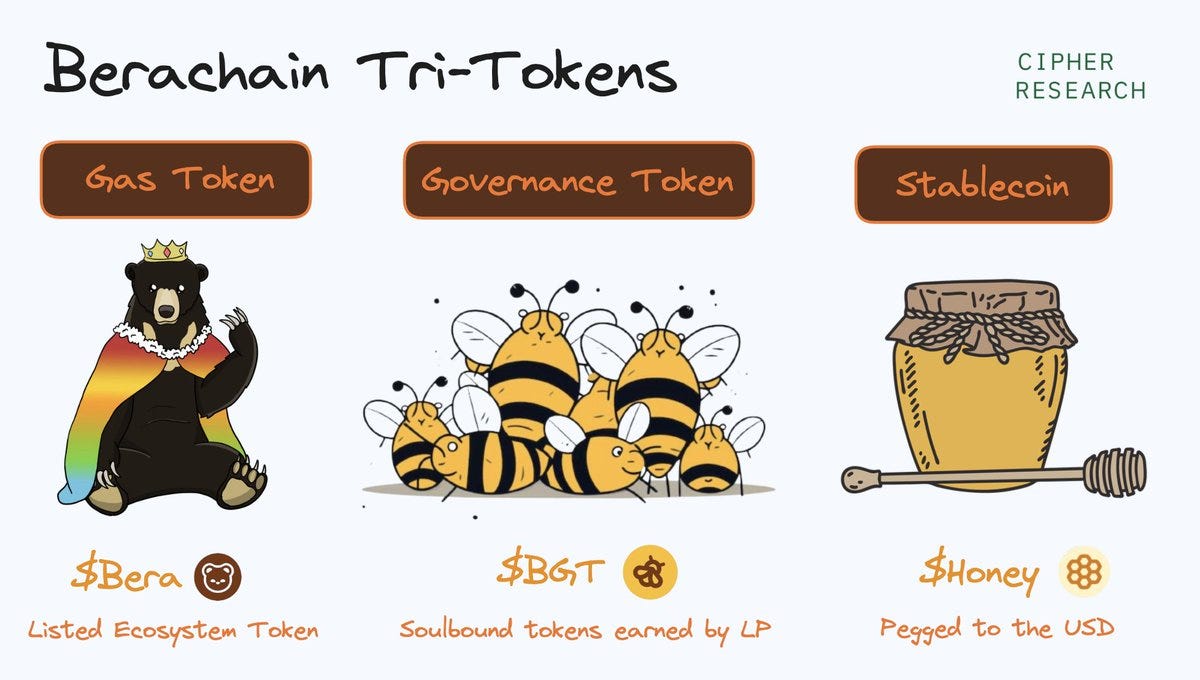
This tri-token system allows for specialized functions, unlike traditional Proof of Stake (PoS) chains where a single token (like ETH) is used for multiple purposes such as gas, staking, and governance.
Proof of Liquidity
Proof of Liquidity begins with users.
1. Users:
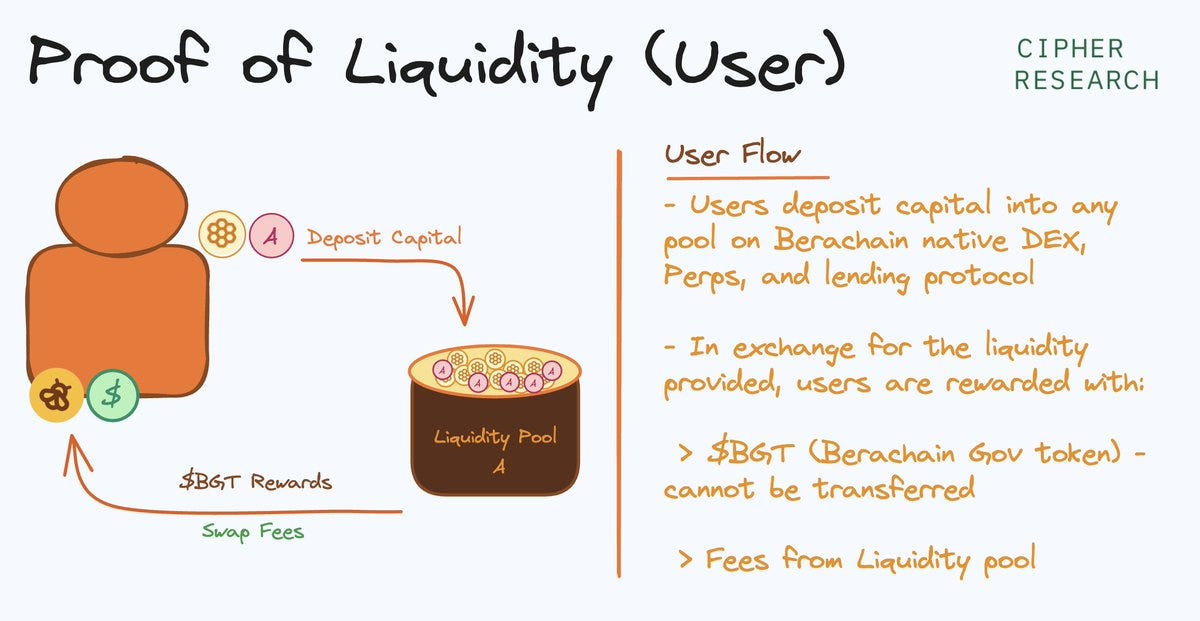
Depositing Liquidity: Users begin by depositing capital (including tokens and $HONEY) into liquidity pools or vaults within Berachain's native applications, such as its decentralized exchange (DEX).
Receiving $BGT: In return for their capital, users receive $BGT, a soul-bound token that cannot be transferred. Users also earn fees from these liquidity pools.
2. Utilizing $BGT:
Burning for Profits: Users can burn $BGT for immediate profits.
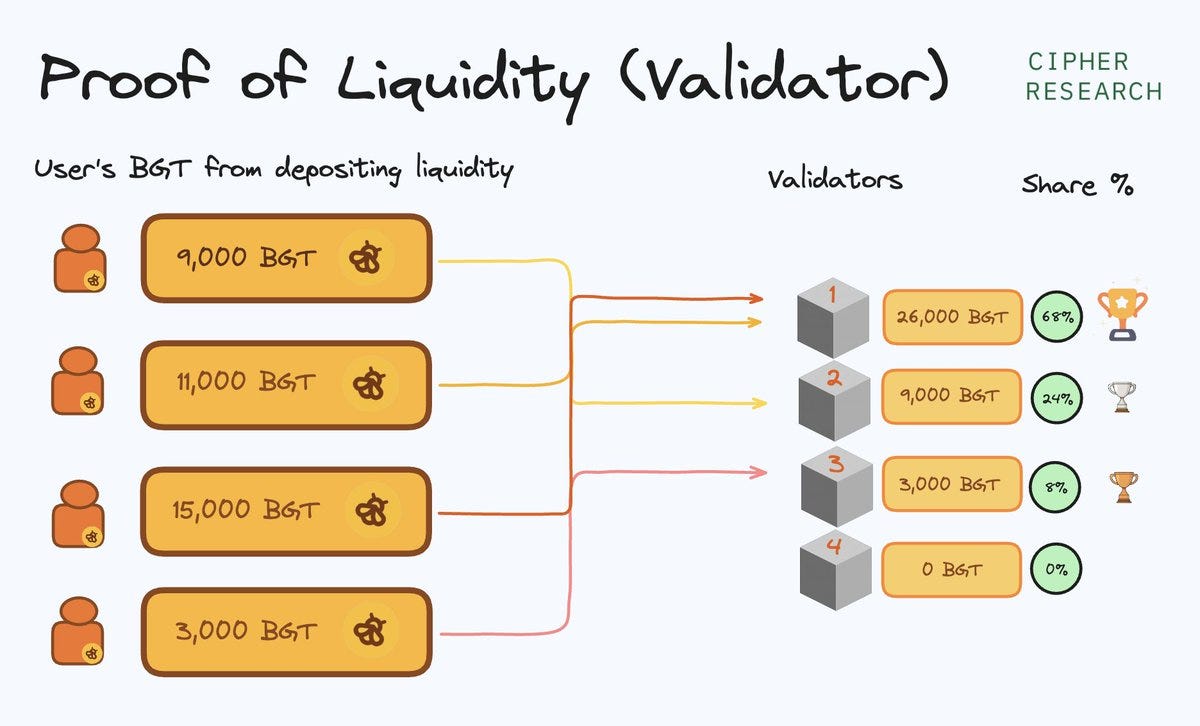
Delegating to Validators: Alternatively, users can delegate their $BGT to validators who secure the network. Validators are ranked based on the percentage of $BGT delegated to them
3. Validator Role:
Validators have the power to create blocks on Berachain
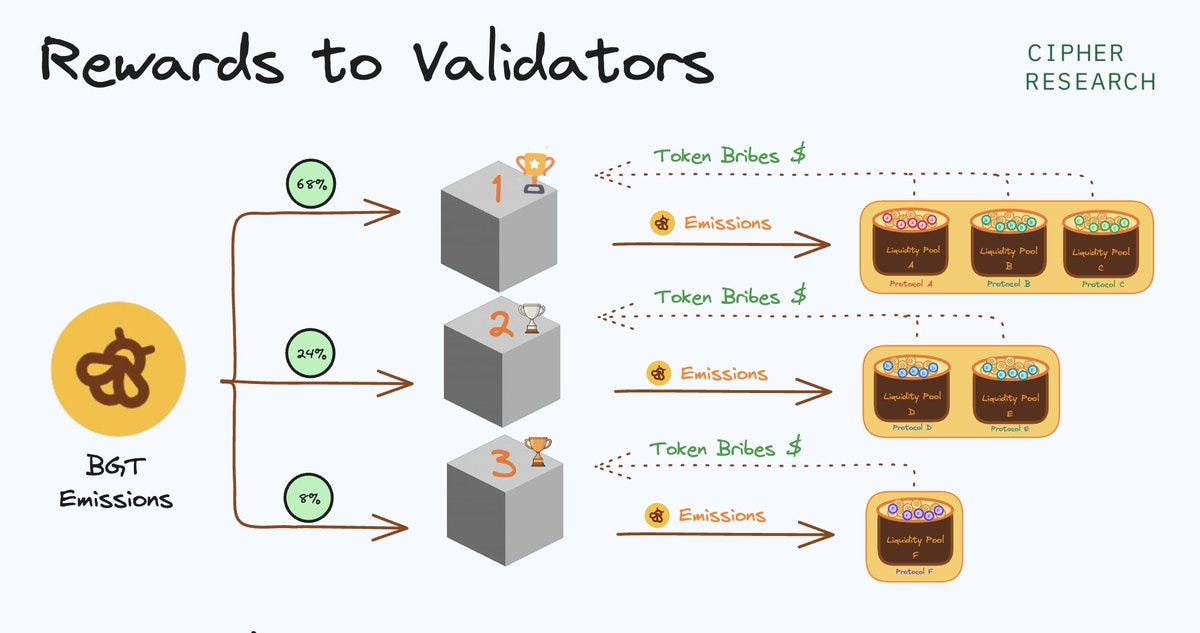
By creating new blocks, validators can direct new $BGT emissions to specific liquidity pools. Validators with the highest BGT delegated get the most emissions
Projects on Berachain want the most $BGT emissions directed to the pools with their tokens, as it makes their tokens the most liquid.
In exchange for directing BGT emissions to their pools, projects bribe validators with tokens.
4. Protocol Incentivises Validators:
Bribes: Projects on Berachain aim to have $BGT emissions directed to their liquidity pools to increase token liquidity. To achieve this, they incentivize validators by offering bribes in the form of tokens.
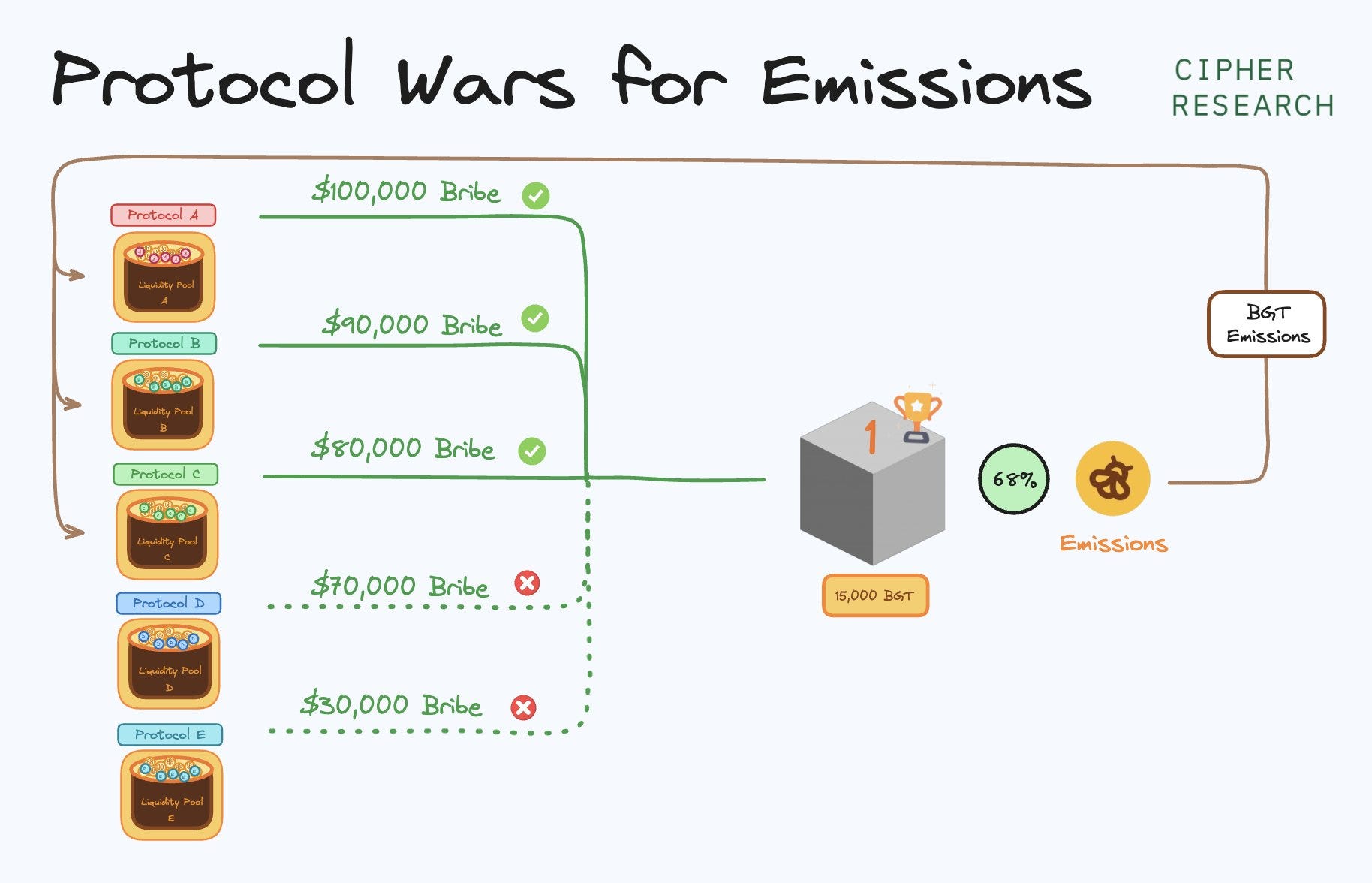
Protocol Wars: This competition creates "protocol wars," where projects vie to bribe top validators with the most $BGT.
The Full PoL Cycle:
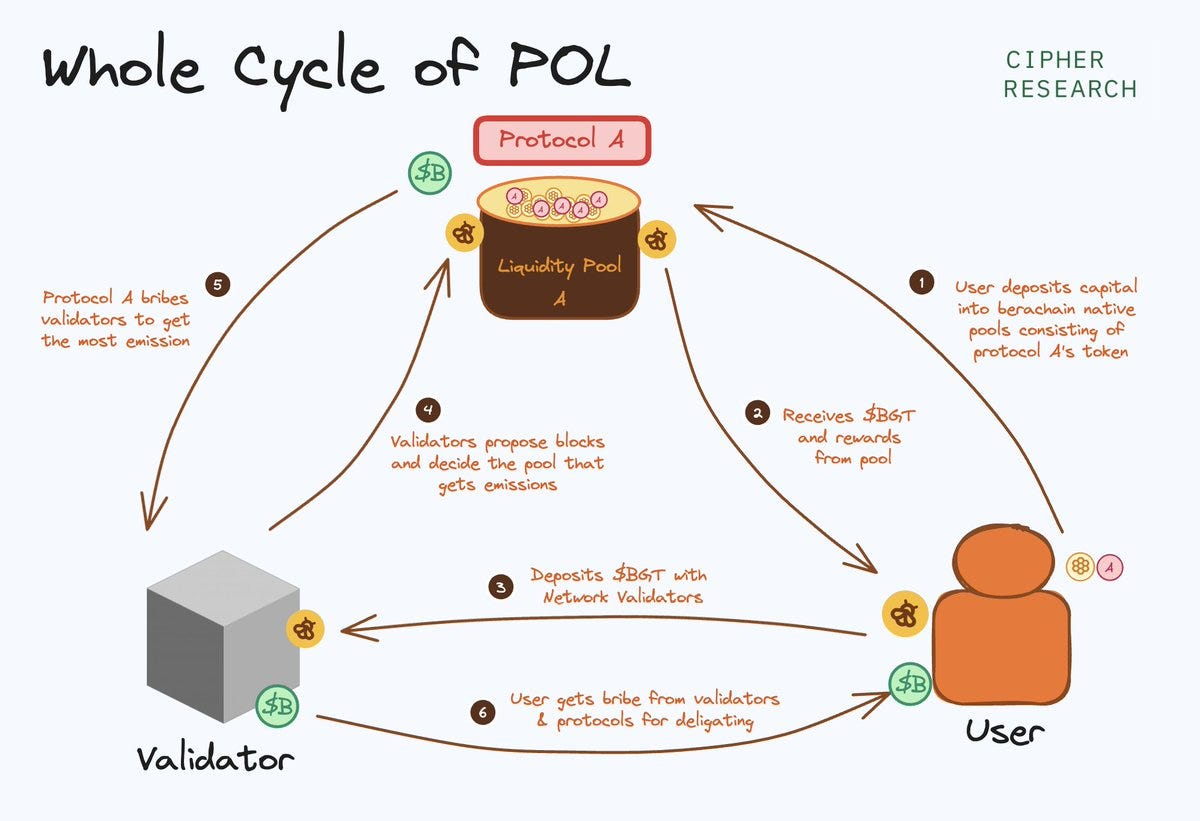
Users deposit liquidity in pools and receive $BGT.
$BGT is delegated to validators.
Validators with the most $BGT determine the allocation of $BGT emissions.
Protocols bribe validators to direct $BGT emissions to their pools.
More users deposit liquidity to earn $BGT.
Repeat the cycle 🔁
User Benefits in PoL
Participants in the PoL mechanism receive substantial rewards, including:
Fees from DEX, Perps, and Lending Apps: Users earn a share of fees generated by these applications.
Bribes from Validators and Projects: Users receive part of the bribes offered to validators.
Trading Fees from Pools: Users earn trading fees from liquidity pools.
$BGT Inflation: Participants benefit from the inflation of $BGT.
$HONEY Fees: Users earn fees related to the stablecoin.
Gas Fees: Participants share in the gas fees generated by the network.
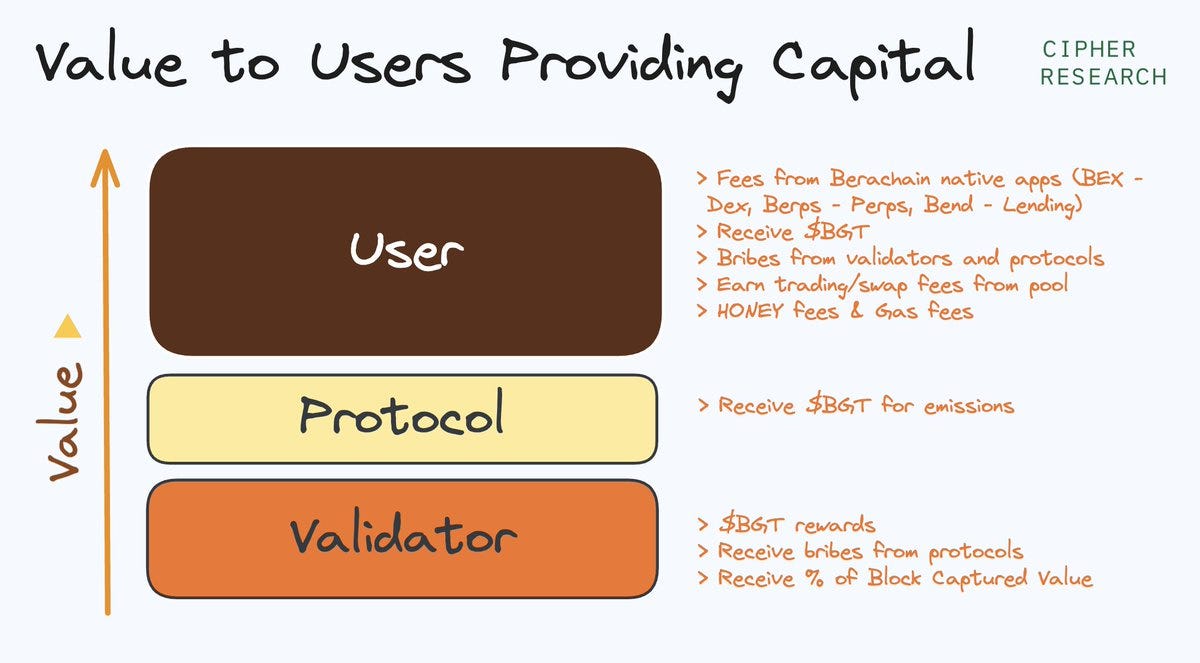
This system contrasts with PoS consensus, where validators typically receive the majority of rewards. PoL ensures that liquidity providers and users gain significant benefits, creating a sticky capital environment within Berachain.
Major Flywheel
POL creates a flywheel of liquidity and users, offering users greater value than what was initially seeded.
Capital deposited in Berachain becomes sticky. In the future, $BGT rewards will extend beyond Berachain's native protocols to other protocols, igniting TVL wars
All protocols bribe to increase their TVL.
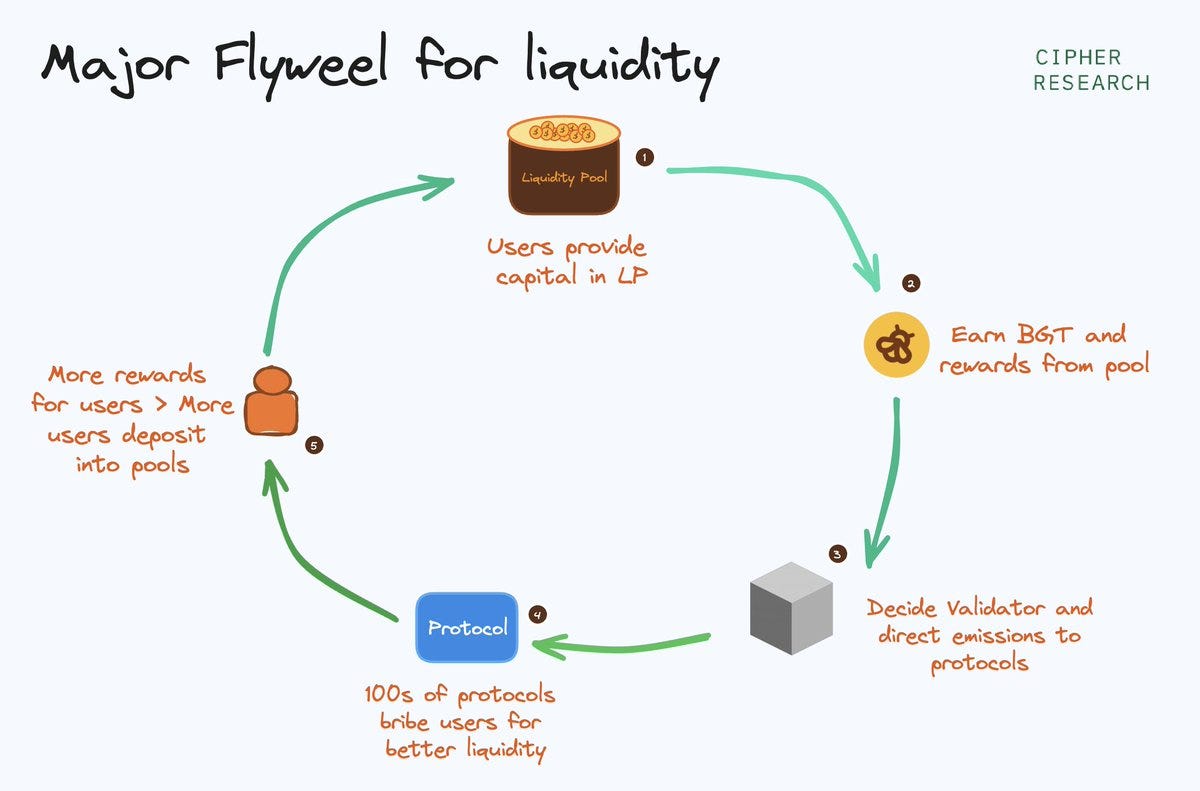
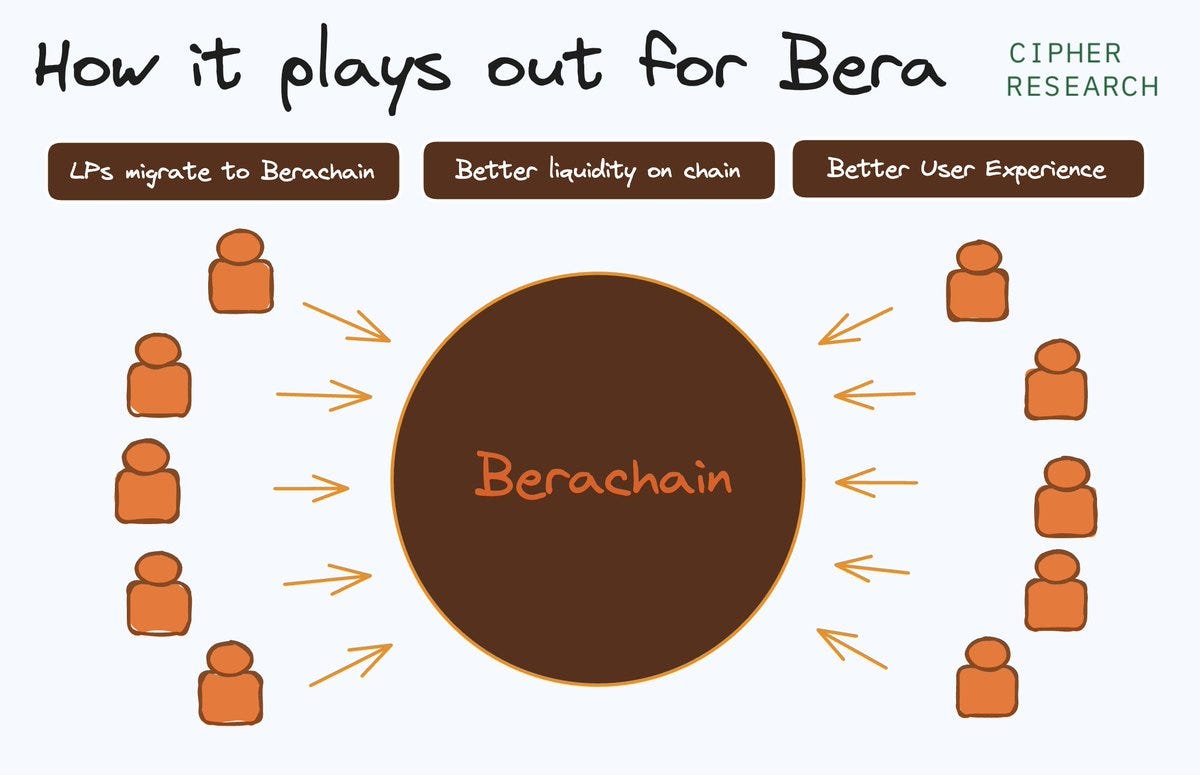
This POL system attracts liquidity and users from other chains.
Underwater LPs from other chains migrate
100s of protocols compete for BGT emissions
Best liquidity on DEXS and Perps on any chain
Many more primitives