
MegaETH Explained Simply in 2 minutes
With 100,000 TPS and sub-millisecond latency, MegaETH is set to be the hottest and fastest Layer 2 chain. We breakdown the why, what and how of MegaETH for dummies.


The Limits of Current Blockchains
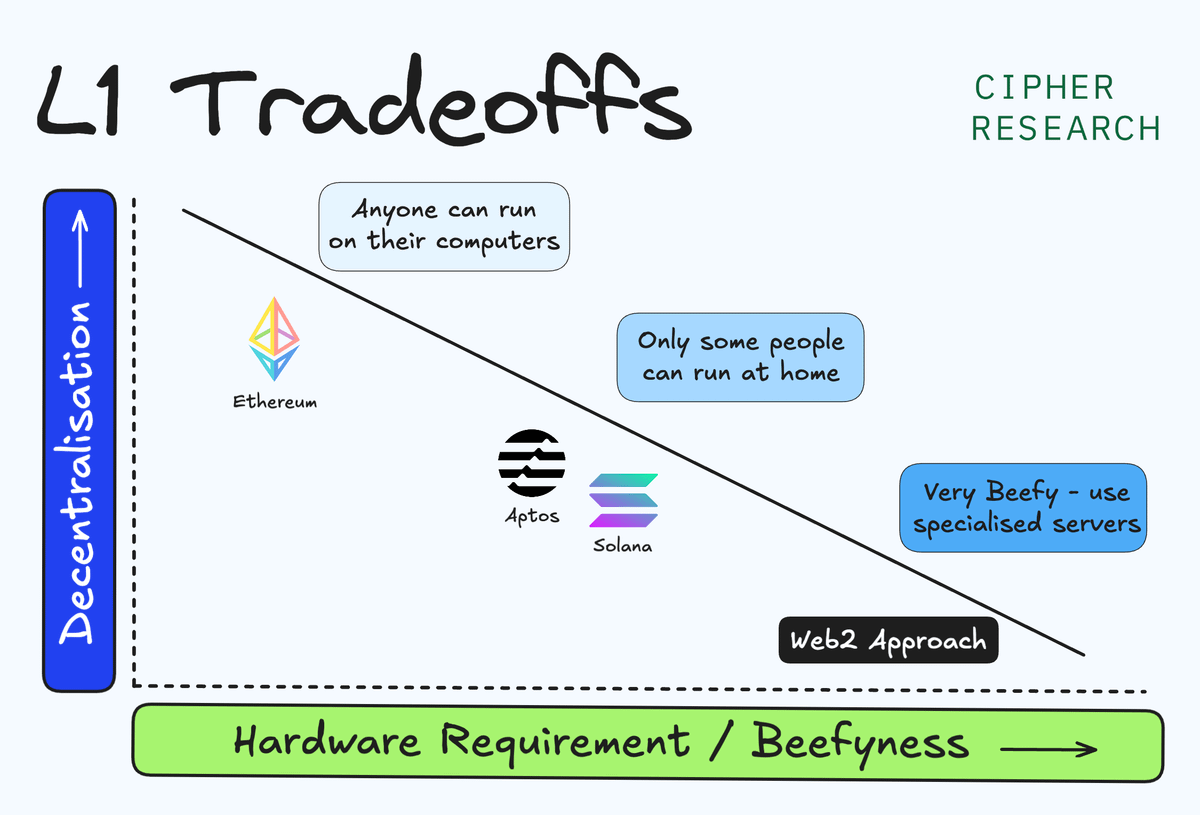
The current state of blockchains does not meet the standards set by Web2.
All Layer 1 blockchains must navigate the trade-offs between decentralization and hardware requirements.
Ethereum prioritizes decentralization, enabling anyone to run nodes with minimal hardware on their computers, which limits its performance.
In contrast, Web2 systems can achieve high performance by leveraging powerful hardware, without the need for decentralization.
Imagine Layer 1 blockchains as a classroom with four tasks, each ranging from easy to complex.
In this setting, there are smart students—representing beefy nodes—who can quickly finish all the tasks. Meanwhile, slower students—symbolizing weaker nodes—take their time and may struggle with the more challenging problems.
However, in this classroom, everyone must wait for the slowest student to finish before they can move on.
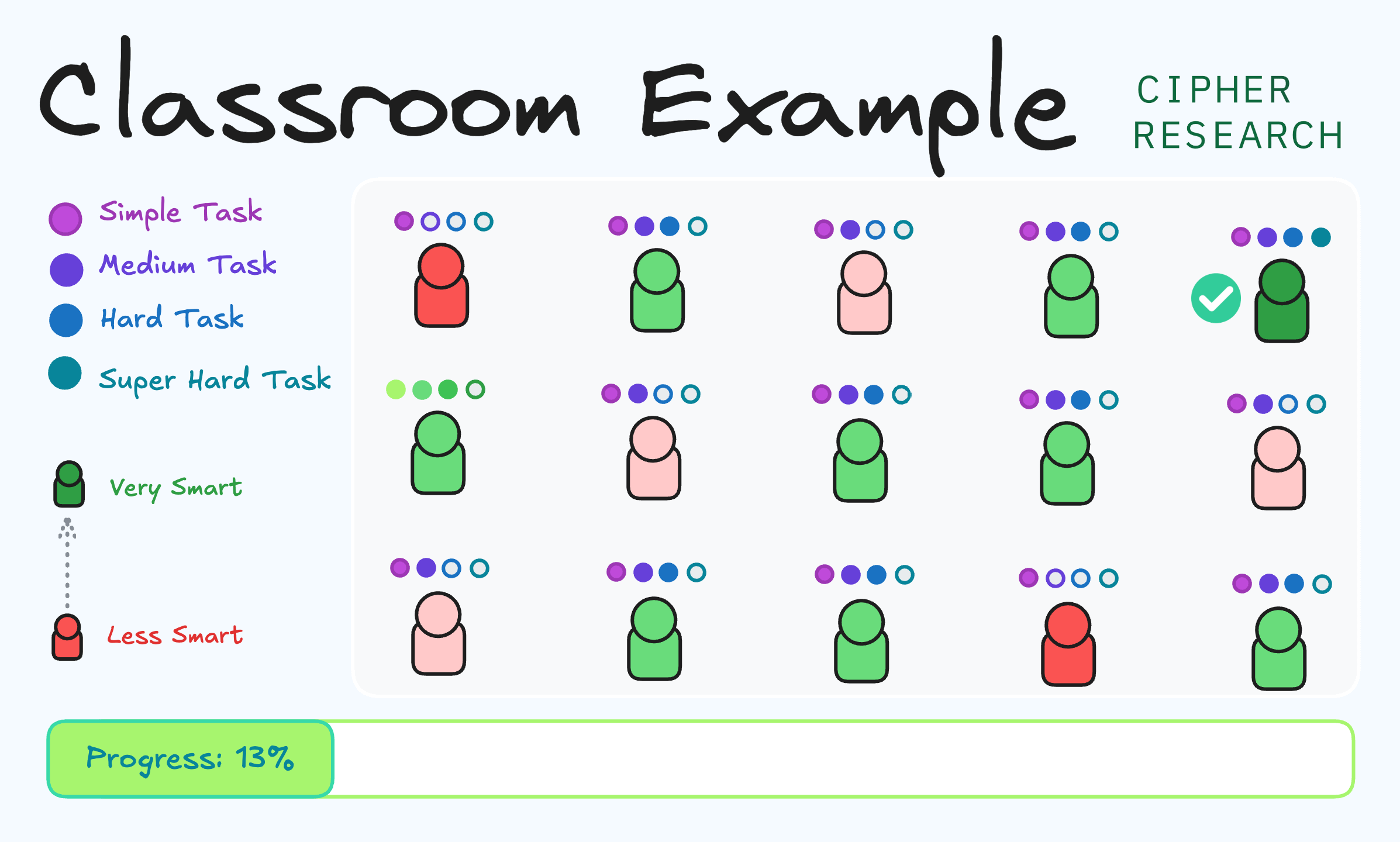
This mirrors how Layer 1 blockchains operate, where all nodes must complete their tasks, and the overall speed is dictated by the performance of the least capable nodes.
Therefore, L1s are slow and can’t fundamentally scale.
How Layer 2 Solutions Attempt to Solve This
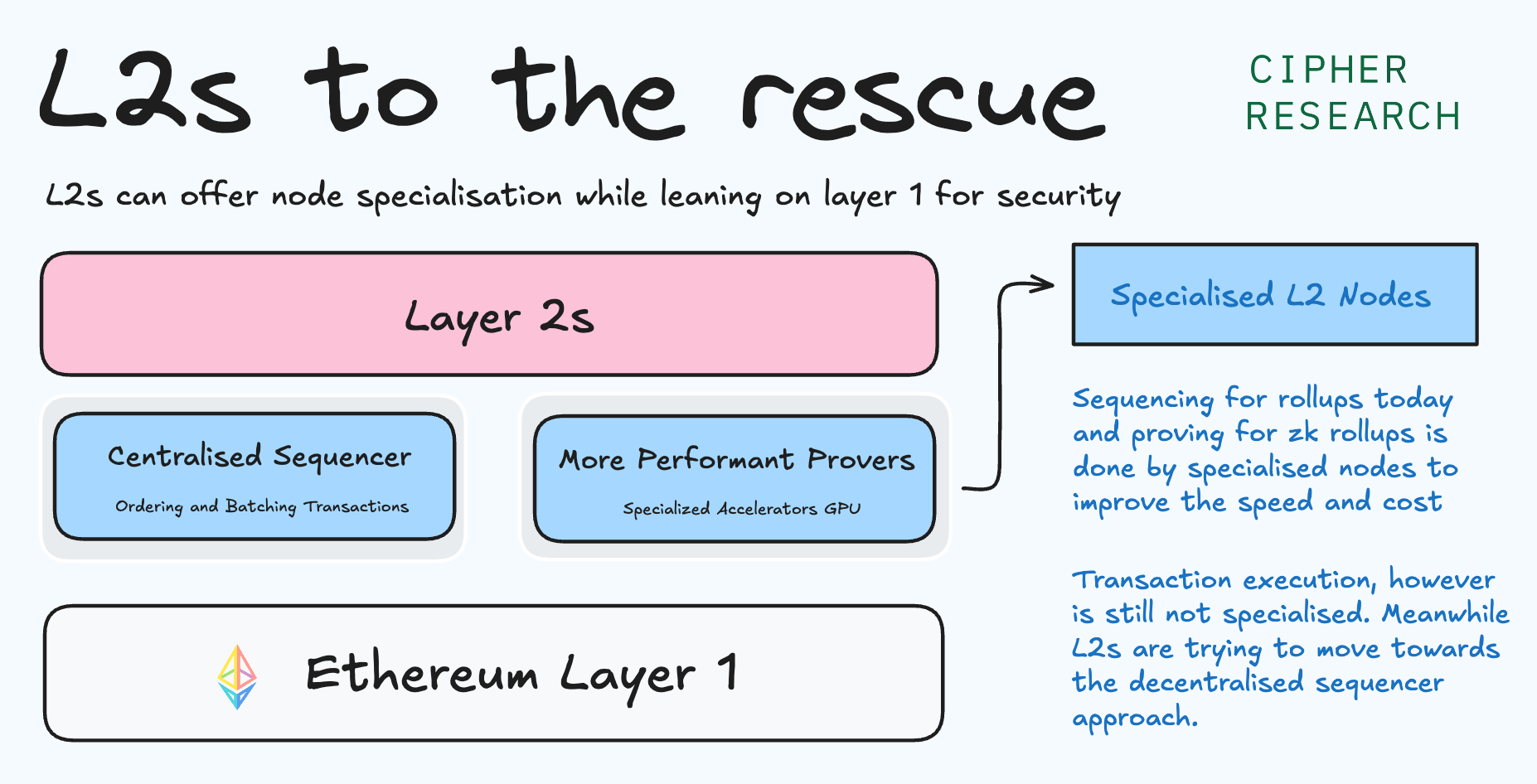
L2s meanwhile are offer a new approach, moving beyond one-size-fits-all node requirements while relying on Ethereum for security.
They already use specialized nodes today such as the centralised sequencers for transaction ordering. Prover nodes in ZK-Rollups often rely on specialized accelerators such as GPU and FPGA .
Yet all L2s today still lack specialization across all functions including execution.
MegaETH: A New Era of Node Specialization
Enter MegaETH, which takes node specialization to a whole new level!
Returning to our classroom analogy, imagine if the smartest students tackled the most challenging problems while other students focused on easier ones.
By distributing tasks based on capabilities, the whole class finishes faster.
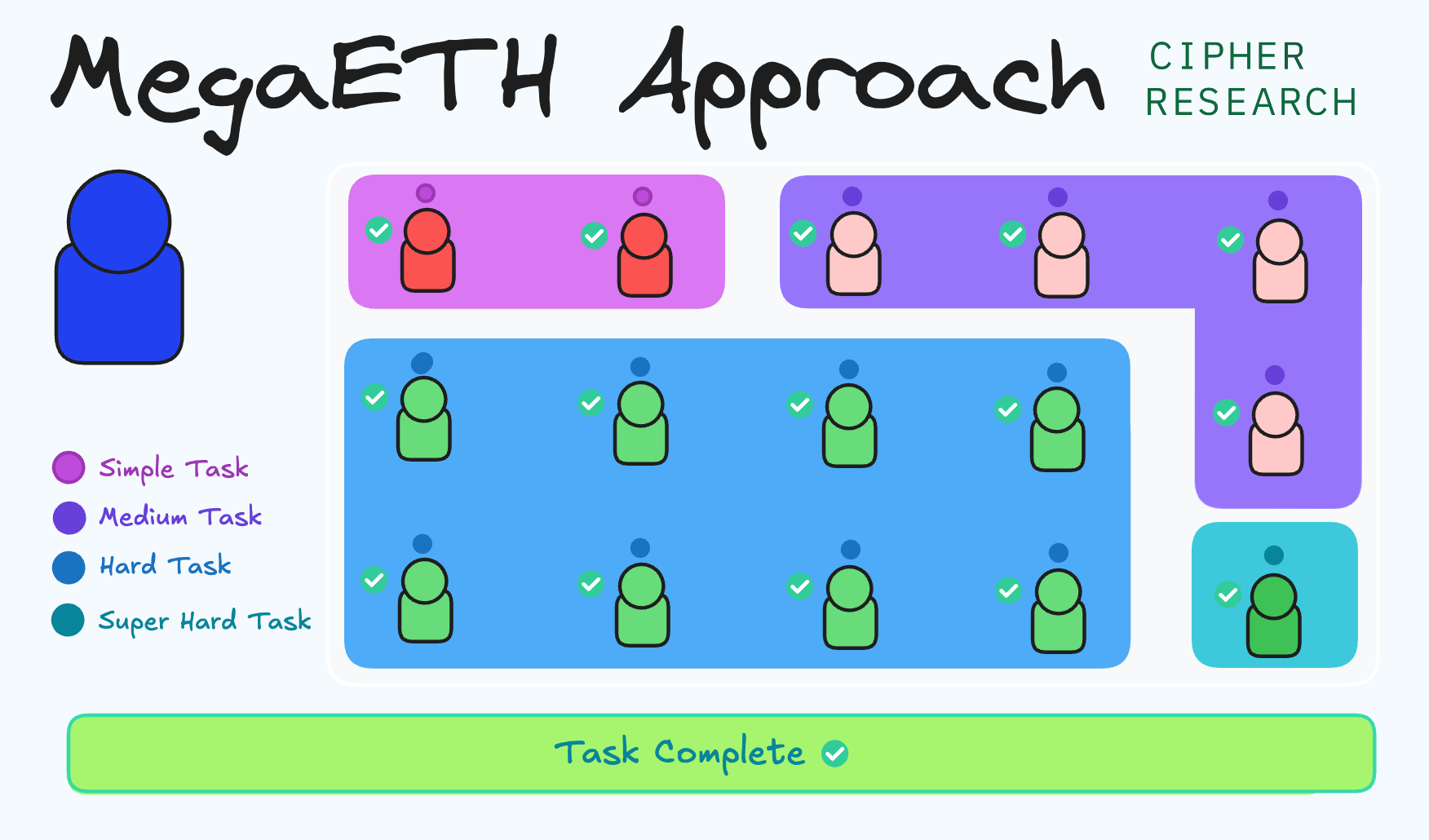
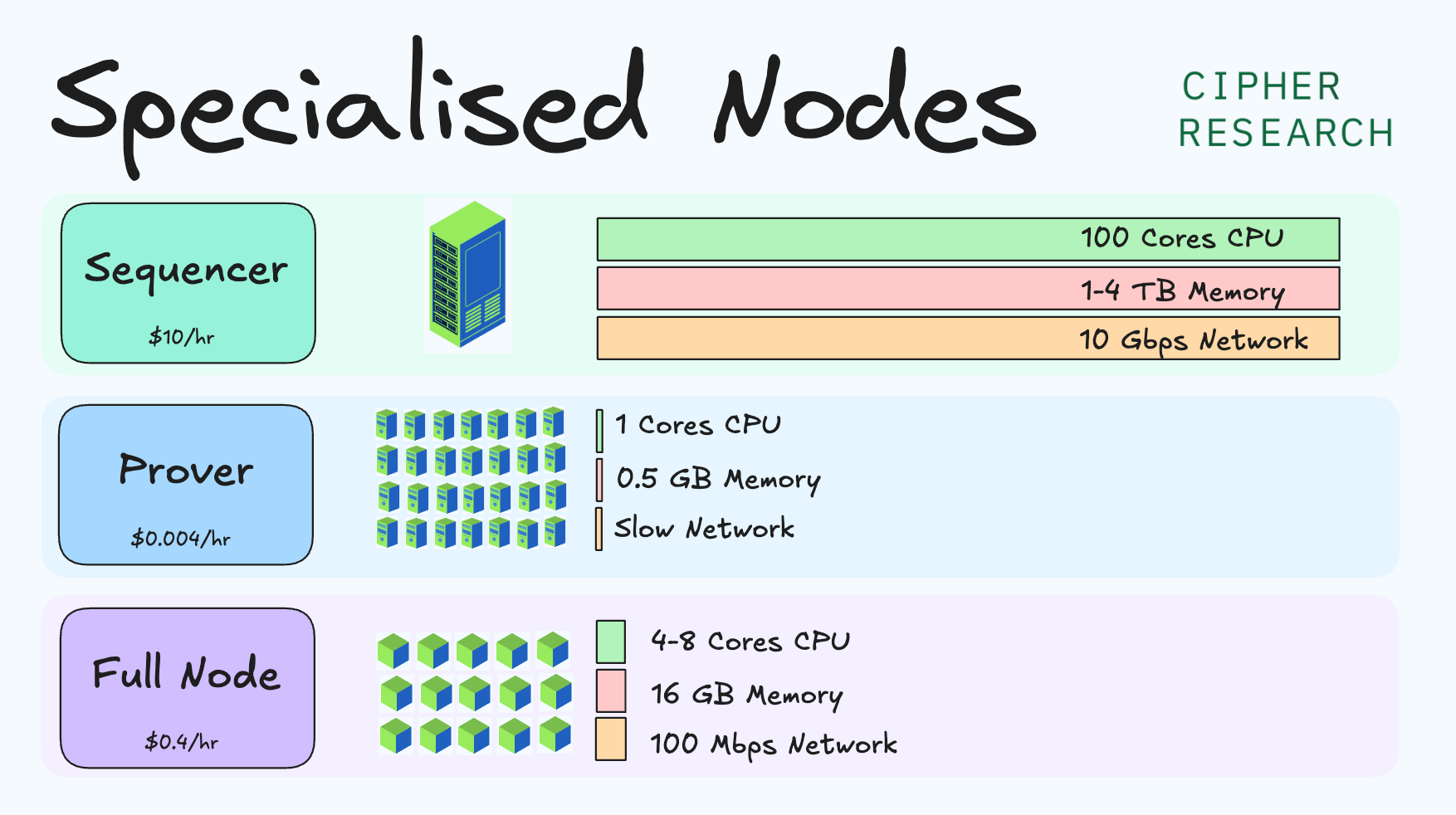
MegaETH applies this principle to its architecture, assigning distinct roles to sequencers, provers, and full nodes for optimal efficiency:
Sequencer: The powerhouse, running on high-performance servers, is responsible for ordering and executing user transactions at lightning speed.
Prover and Full Nodes: These nodes have lower hardware requirements, reducing bottlenecks and creating a well-balanced, high-performance system.
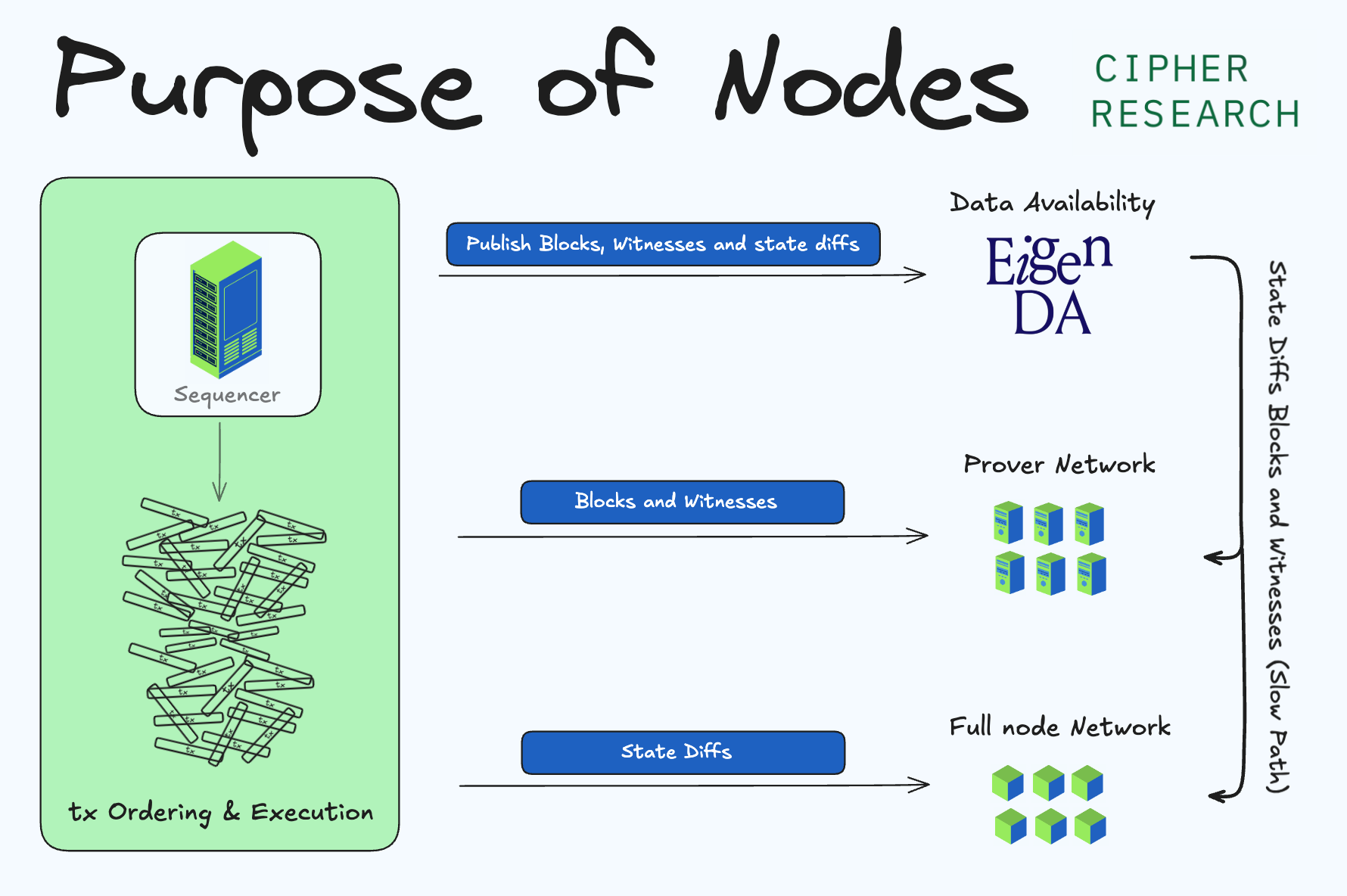
In this structure, the Sequencer does the heavy lifting, while blocks, witnesses, and state diffs are efficiently distributed across EigenDA (for data availability), a prover network, and a full node network.
This system-wide specialization enhances efficiency without compromising too much on the decentralization.
Beyond Node Specialization: Additional Innovations
MegaETH doesn’t stop at node specialization.
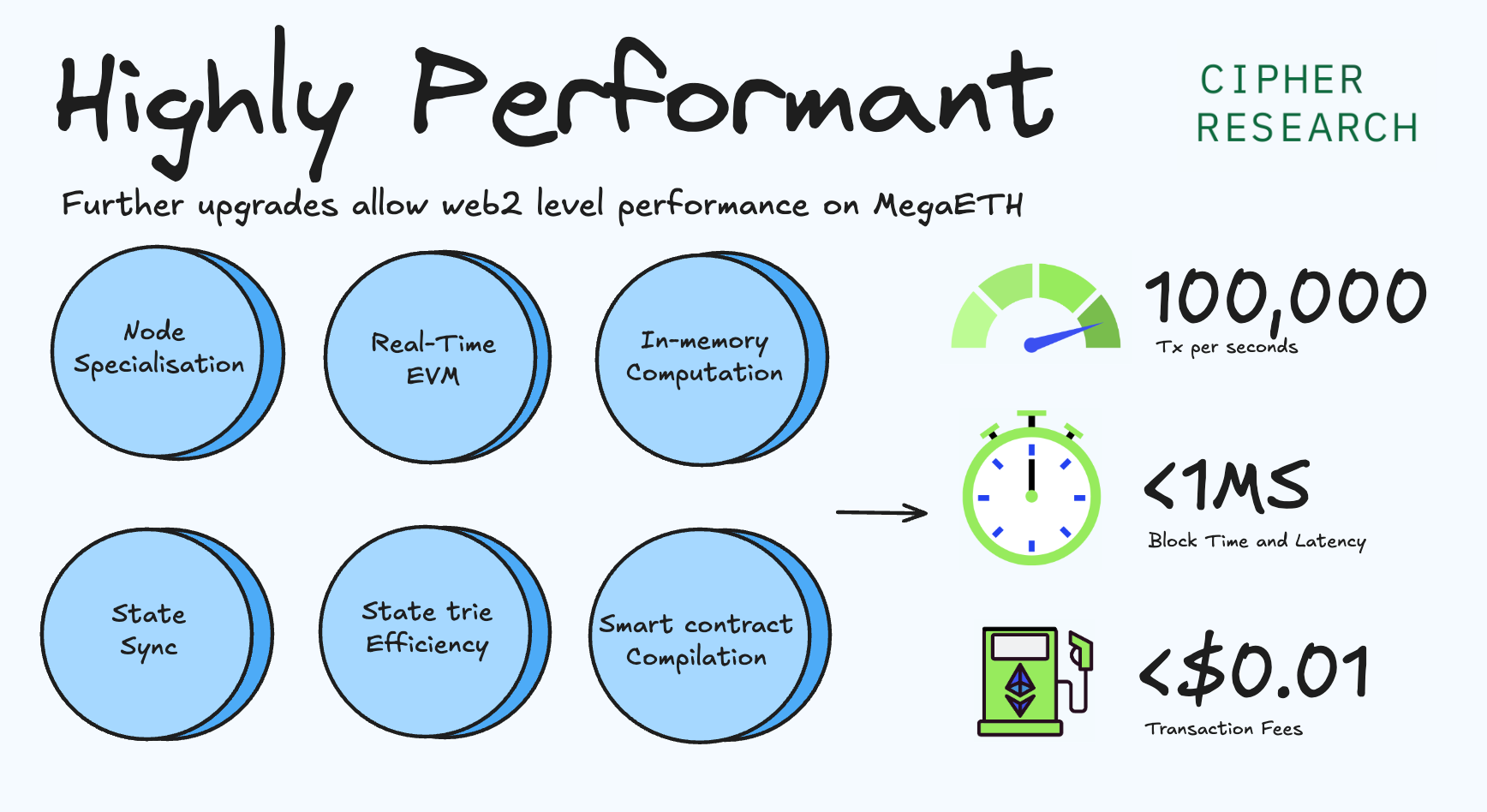
Its performance is also driven by state sync and in-memory computation, allowing even faster data access and throughput.
These innovations propel MegaETH to an astounding 100,000 TPS and sub-1ms block times, performance metrics unheard of in blockchain technology.
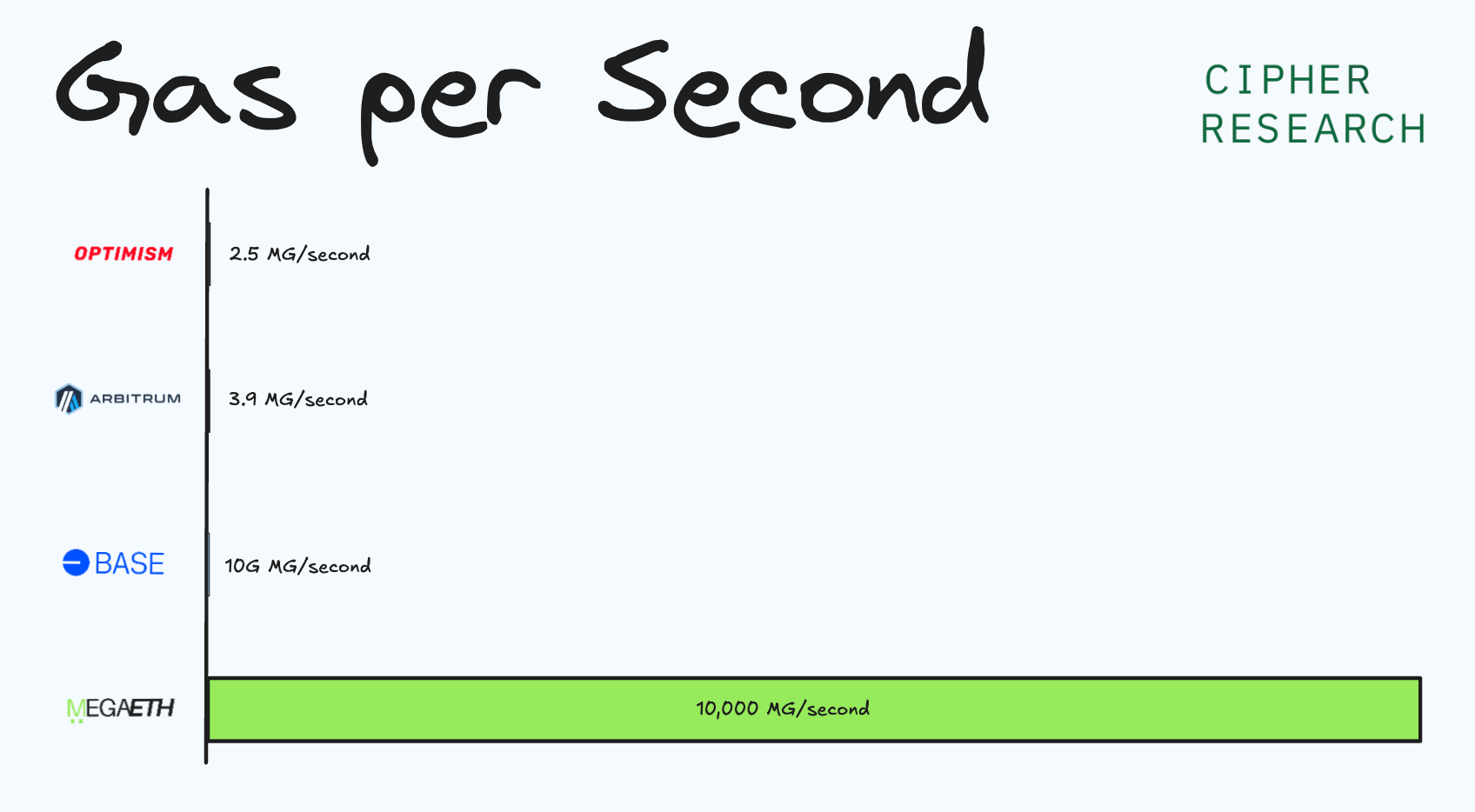
Measured in Gas per Second (MG/s), MegaETH’s also has 10,000 MG/s throughput making it not only the fastest L2 to launch in the next six months but also the most powerful chain by a significant margin.
Real-World Applications at Web2 Speed
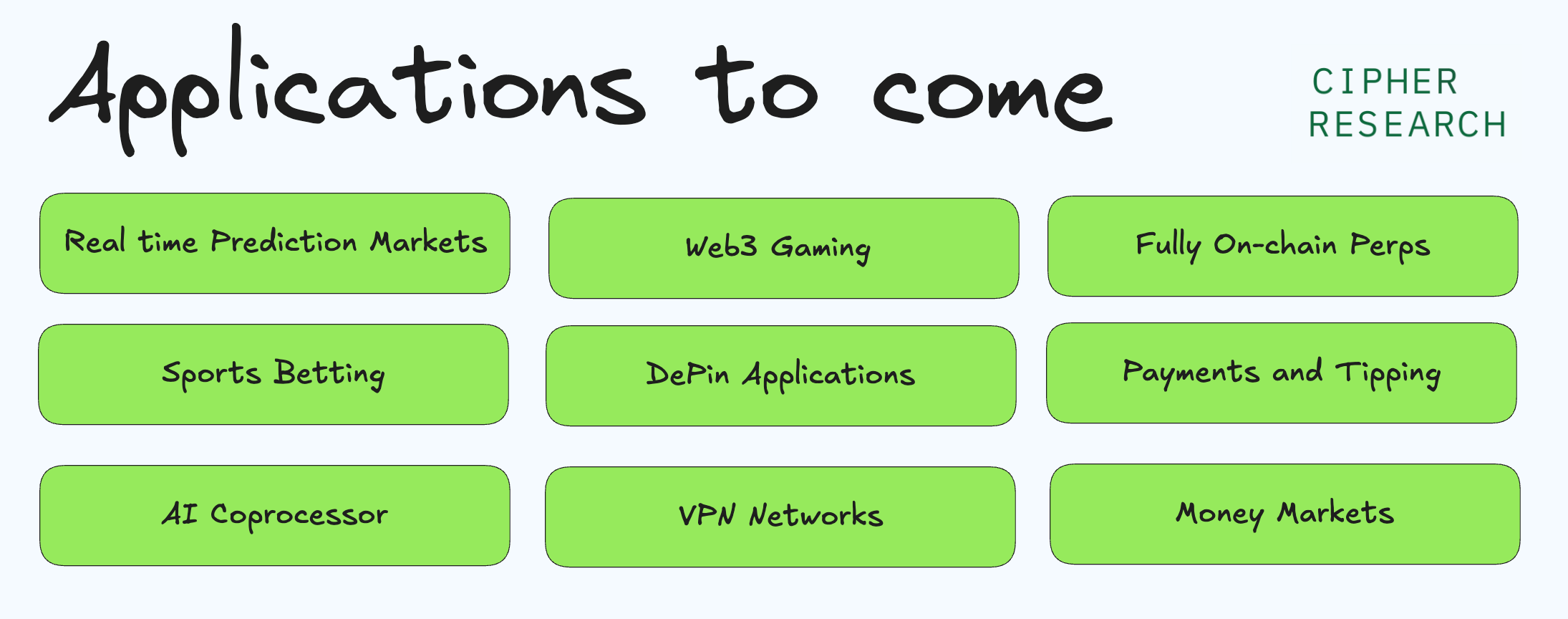
With MegaETH’s Web2-comparable speeds, a new wave of real-time applications becomes possible.
Think gaming, perpetual contracts, betting platforms, and VPNs—all with the responsiveness of traditional web 2 systems but with the security and transparency of blockchain.
For the first time, we’ll see applications that are not just fast but instant, revolutionizing the user experience and opening the door to new on-chain primitives.
Summary
MegaETH brings a uniquely powerful approach to Layer 2s.
By heavily specializing nodes, it achieves centralized execution speeds while maintaining a decentralized validation system.
With a 100,000 TPS capacity and an astonishing 1ms latency, MegaETH is set to be the fastest, most efficient chain ever seen.
MegaETH’s record-breaking speeds enable entirely new categories of decentralized applications (DeFi, NFTs, gaming, and more), taking on tasks that are either limited or impossible with current blockchain infrastructure.
In particular, areas like Decentralized Physical Infrastructure Networks (DePINs), which require low latency for real-world applications, stand to benefit immensely from MegaETH’s capabilities, allowing most functions to happen fully on-chain for the first time ever.
It’s hard not to be excited about MegaETH’s potential and the impact it will have across the blockchain landscape.
Thanks for the deep dive. Our prediction market data adds another angle on this — we published our findings here: https://thomaschin.substack.com/p/megaeth-and-gensyn-post-tge-tracking