
Nillion Explained for Dummies
One of the hottest AI Privacy projects explained in simple terms

Unlocking the Future of AI and Privacy with Nillion
The promise of AI has always been grand: the potential to boost productivity, revolutionize industries, and drive human evolution. However, today’s AI is highly generalist, with models attempting to handle everything, from customer service to creative writing.
While these capabilities are impressive, AI must evolve to unlock true potential. For AI to achieve 100x productivity, it needs to go beyond generalization.
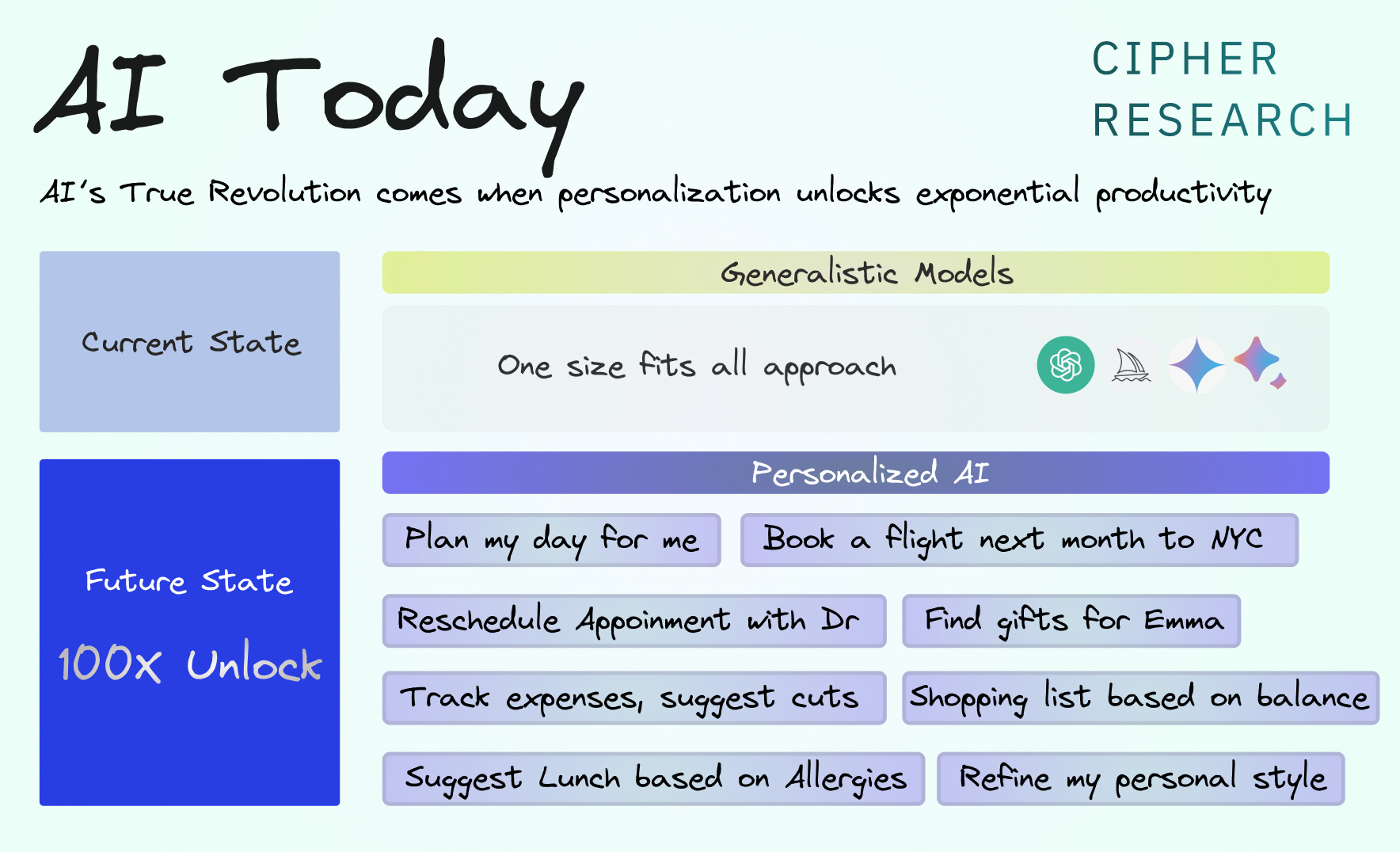
To truly revolutionize our future, AI must become deeply personalized, context-aware, and tailored to the needs of each individual.
But this shift brings with it a serious challenge: how do we achieve true personalization without sacrificing privacy?
The Personalization vs. Privacy Dilemma
For AI to become truly personal, it needs access to deeper data. Data that goes beyond the public data and confidental data we are comfortable in sharing.
We’re talking about Level 3 data: personal messages, private records, and other sensitive information that define who we are.
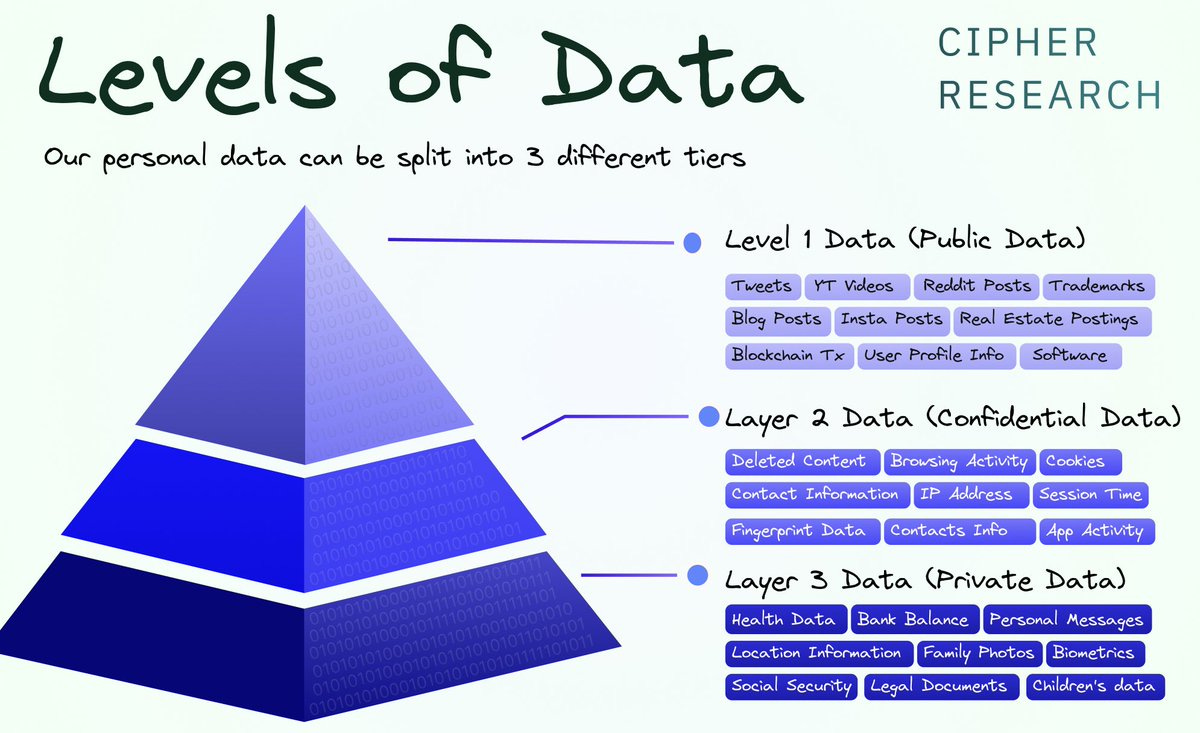
This presents a dilemma. Do we trade our privacy for personalized AI experiences, or do we prioritize our data’s security?
Large companies are already in a fierce competition for this data, with billions of dollars riding on the ability to gather and analyze it.
But sharing your most sensitive data with these companies comes with significant risks: decryption, data breaches, misuse, and even the potential for it to be used against you in the future.
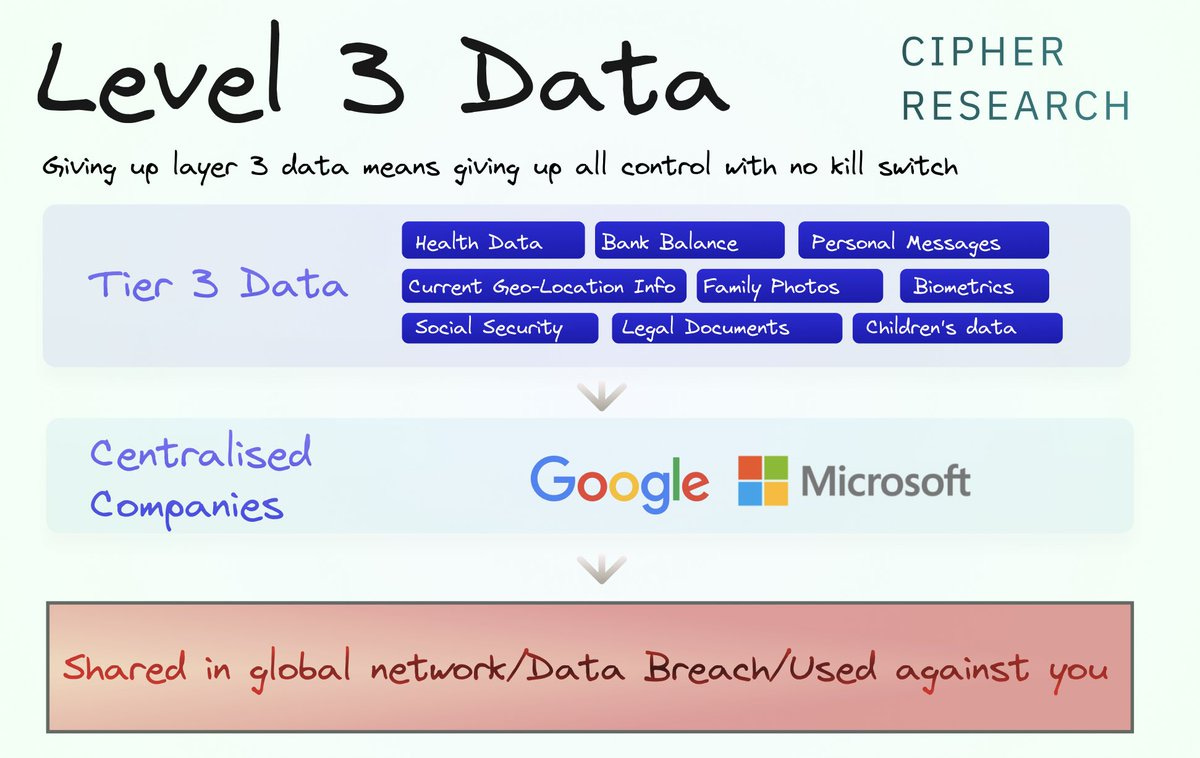
Once this data is out there, there’s no turning back.
The risks are real, and the choice between privacy and personalization becomes increasingly difficult.
Enter Nillion: A New Era of Privacy-Preserving AI
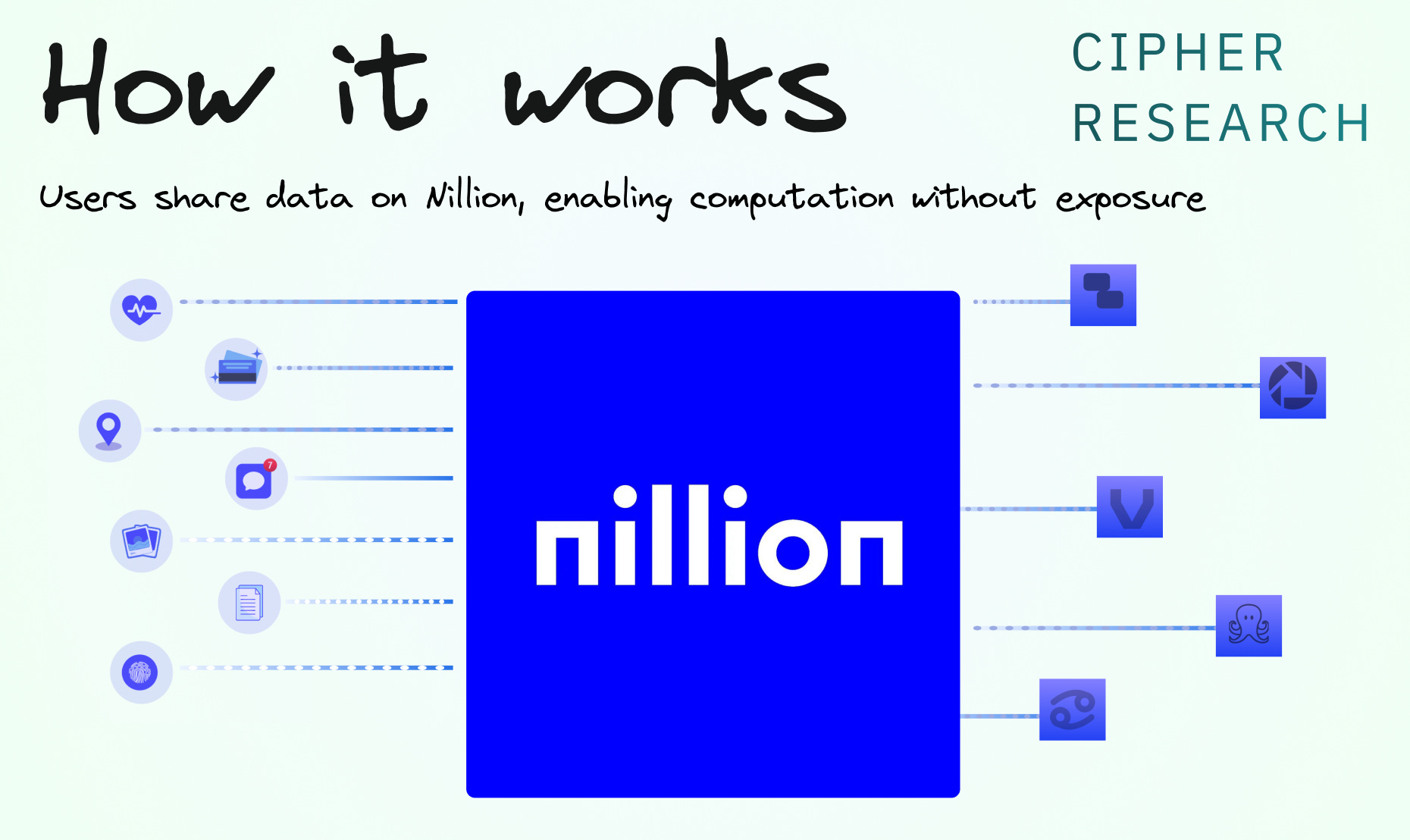
This is where Nillion comes into play. Nillion is developing the world’s first blind computer, a game-changing innovation that unlocks the potential for privacy-preserving applications.
Nillion enables high-value data to be processed without ever exposing the data. This approach opens up the possibility for truly personalized AI, without the need to compromise on privacy.
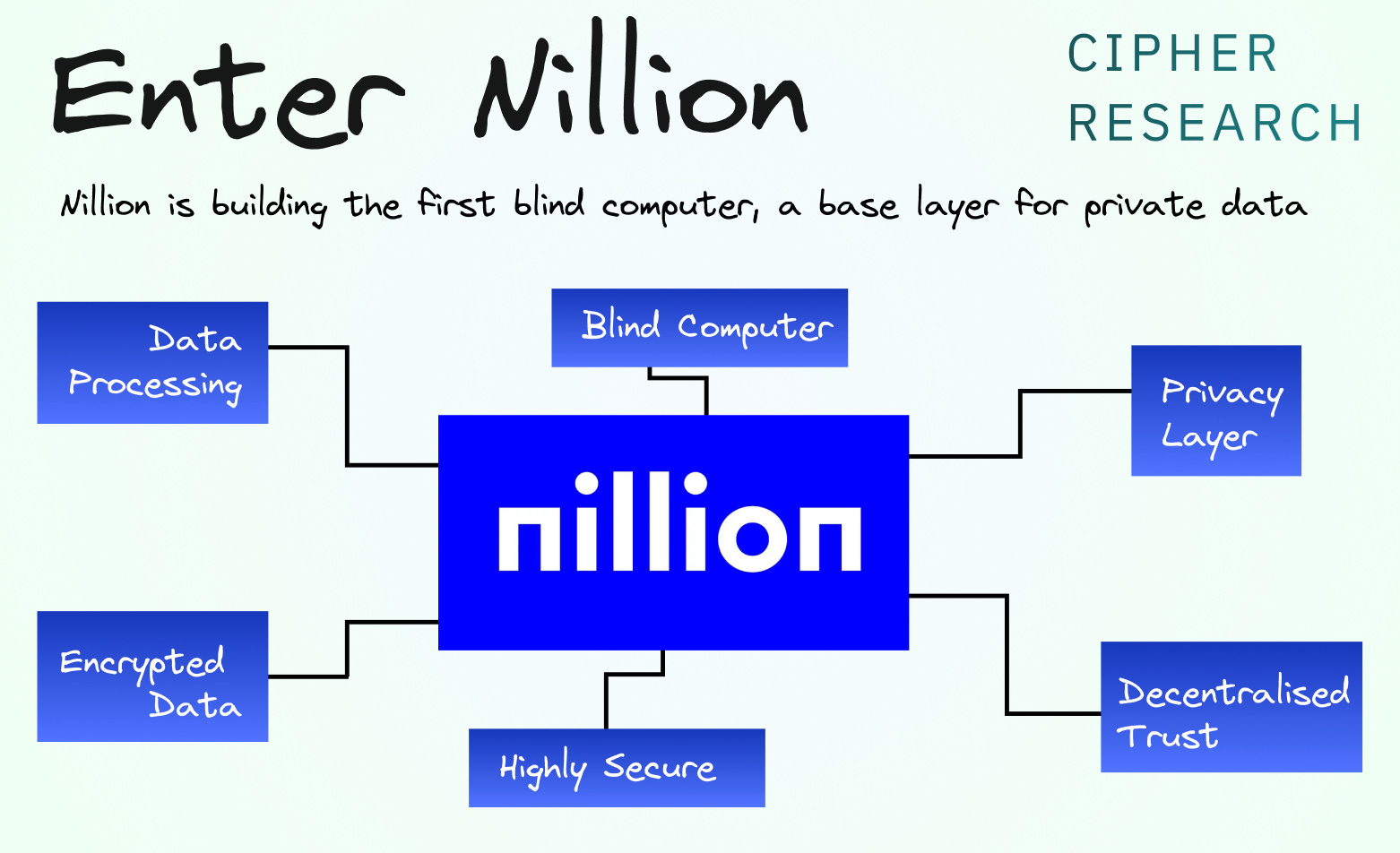
In simple terms, think of Nillion as a “black box.”
Users input sensitive, encrypted data into this black box, where it is stored, processed, and queried - without ever exposing the data. The beauty of Nillion’s system is that applications can use this data without ever reading it.
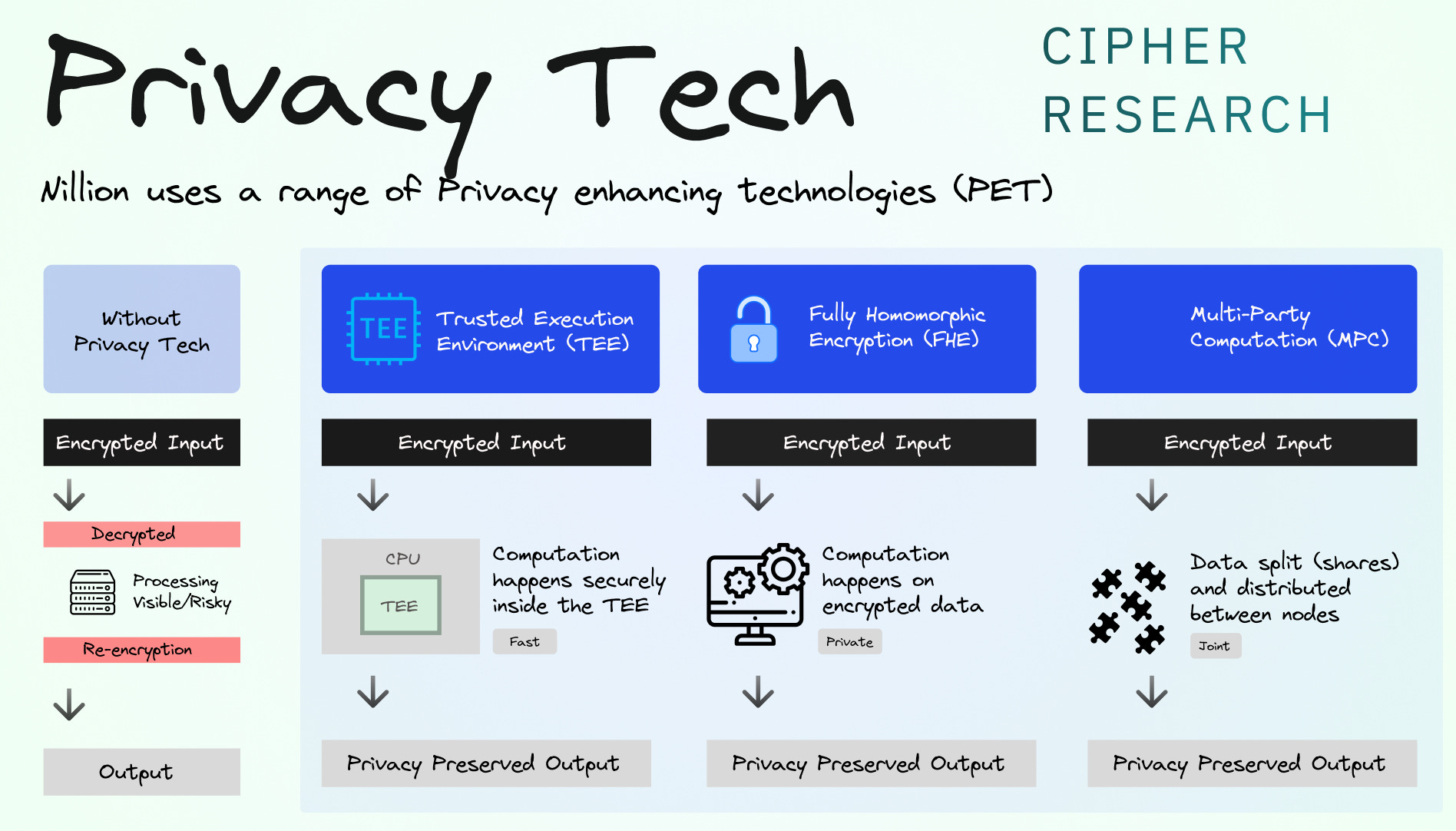
Privacy-Enhancing Technologies at the Core of Nillion’s Blind Computation
What makes Nillion’s approach so revolutionary? It’s built on a combination of cutting-edge privacy-enhancing technologies (PETs) like Trusted Execution Environments (TEEs), Multiparty Computation (MPC), and Fully Homomorphic Encryption (FHE).
Each of these technologies brings unique advantages, and Nillion integrates them all, ensuring that data is never decrypted. Unlike traditional methods, which require data to be decrypted for processing, Nillion’s system operates entirely in encrypted form.
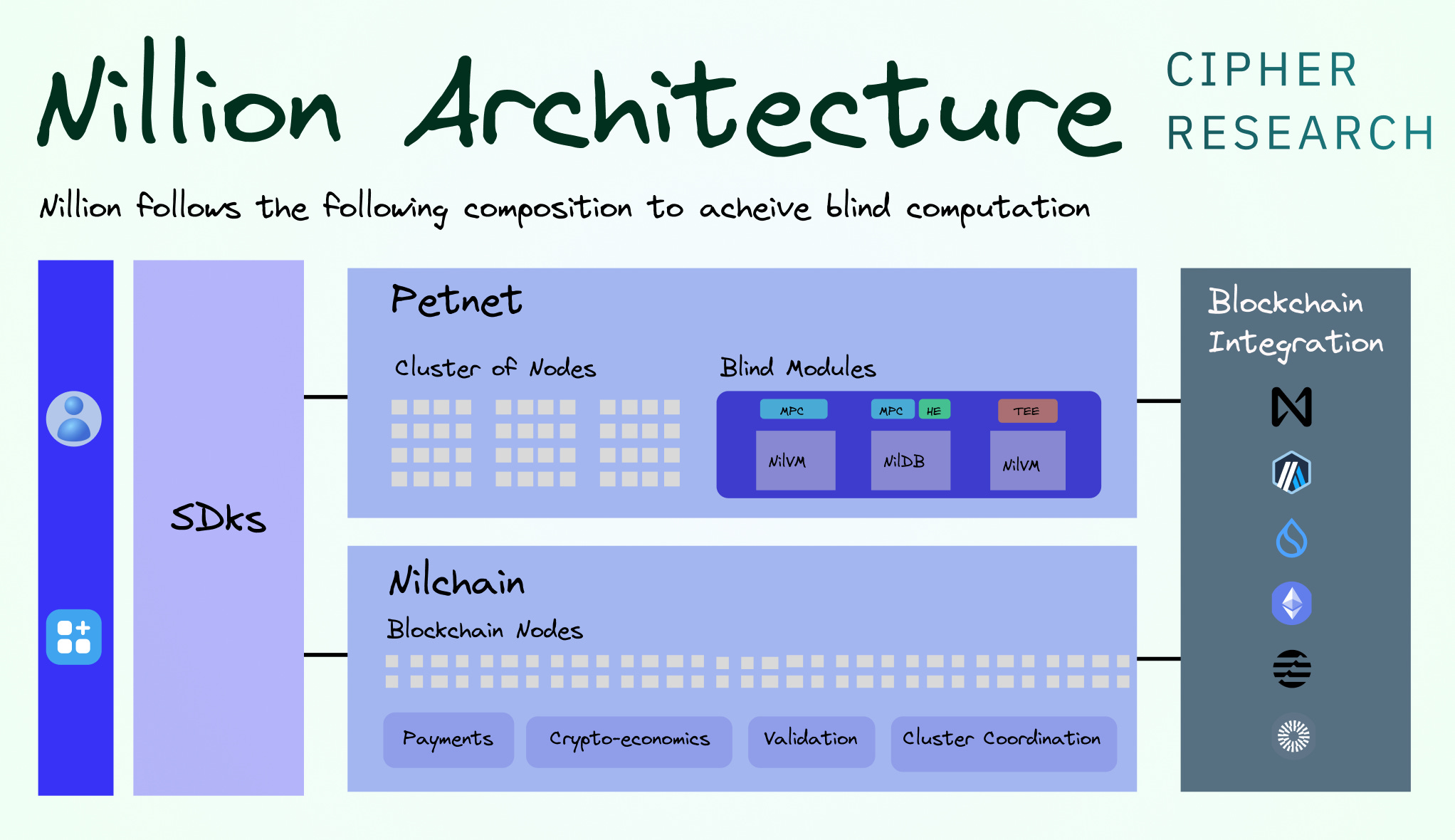
At the heart of Nillion’s architecture are its Blind Modules: nilDB, nilAI, and nilVM.
nilDB (storage) splits data across nodes in a cluster, so no single node ever has access to the full content of the data.
nilAI (AI inferencing) performs machine learning tasks while keeping the data encrypted.
nilVM (computing) handles computing in a privacy-preserving manner.

Nillion’s Dual Architecture: Petnet and Nilchain
Nillion’s architecture has two main components: Petnet and Nilchain.
Petnet contains all the blind modules and PETs that handle storage, computation, and AI inferencing.
Nilchain, powered by the Cosmos SDK, orchestrates tasks and facilitates payment, enabling seamless interaction with decentralized applications.
Blockchain integration allows apps to send requests to Nillion, where the data is securely processed, and tasks are managed and tracked.
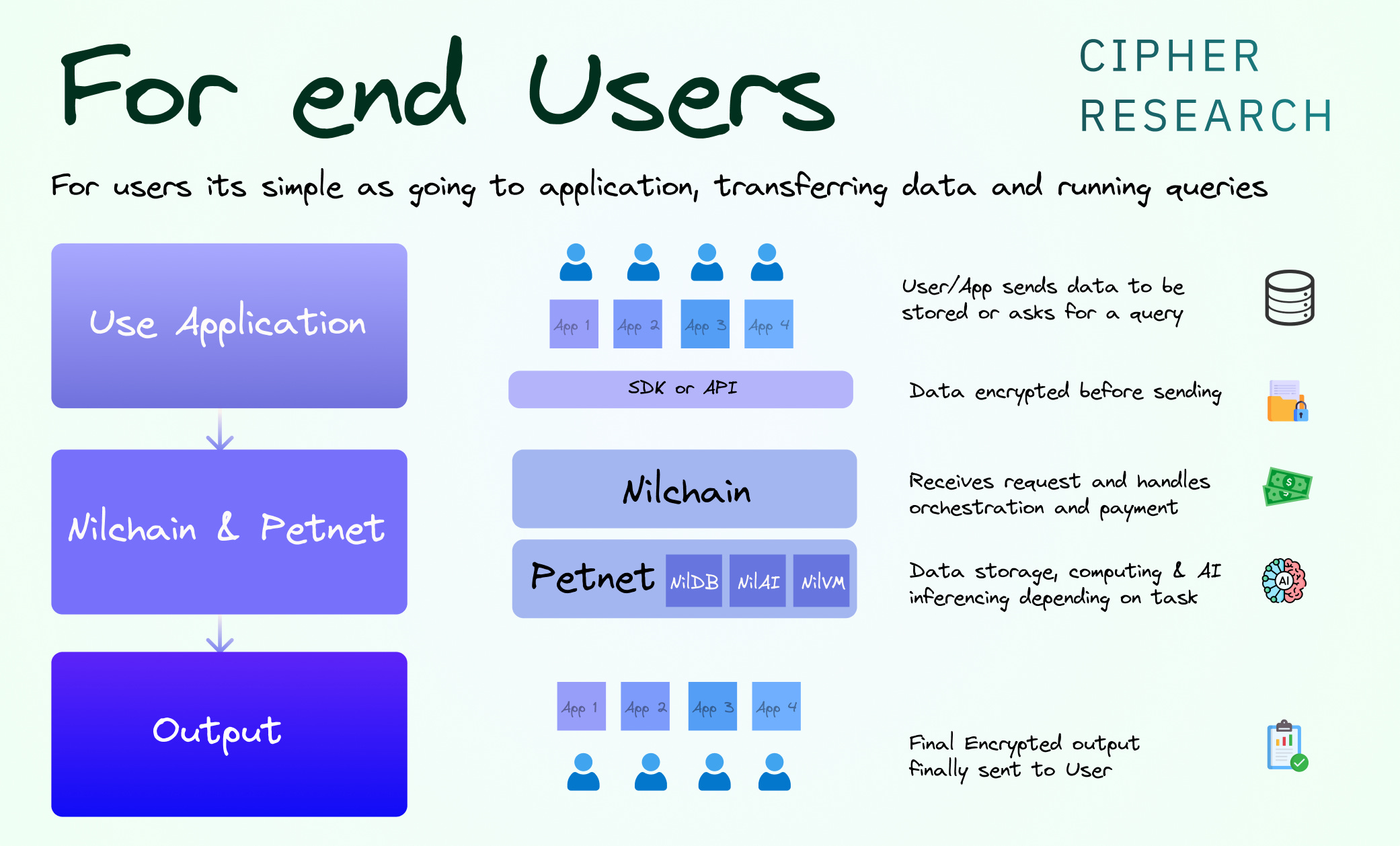
How Nillion Works: A Simple Process
For end users, the process is straightforward:
The user sends a data or computation request via an SDK.
The data is encrypted before transmission.
Nilchain receives the request, handles payments, and assigns tasks to Petnet.
The data is processed using nilDB (for storage), nilVM (for compute), and nilAI (for AI inferencing).
The encrypted output is securely returned to the user.
This system ensures that users can enjoy the benefits of personalized AI without sacrificing the security of their data.
Real-World Applications: Beyond Personalized AI
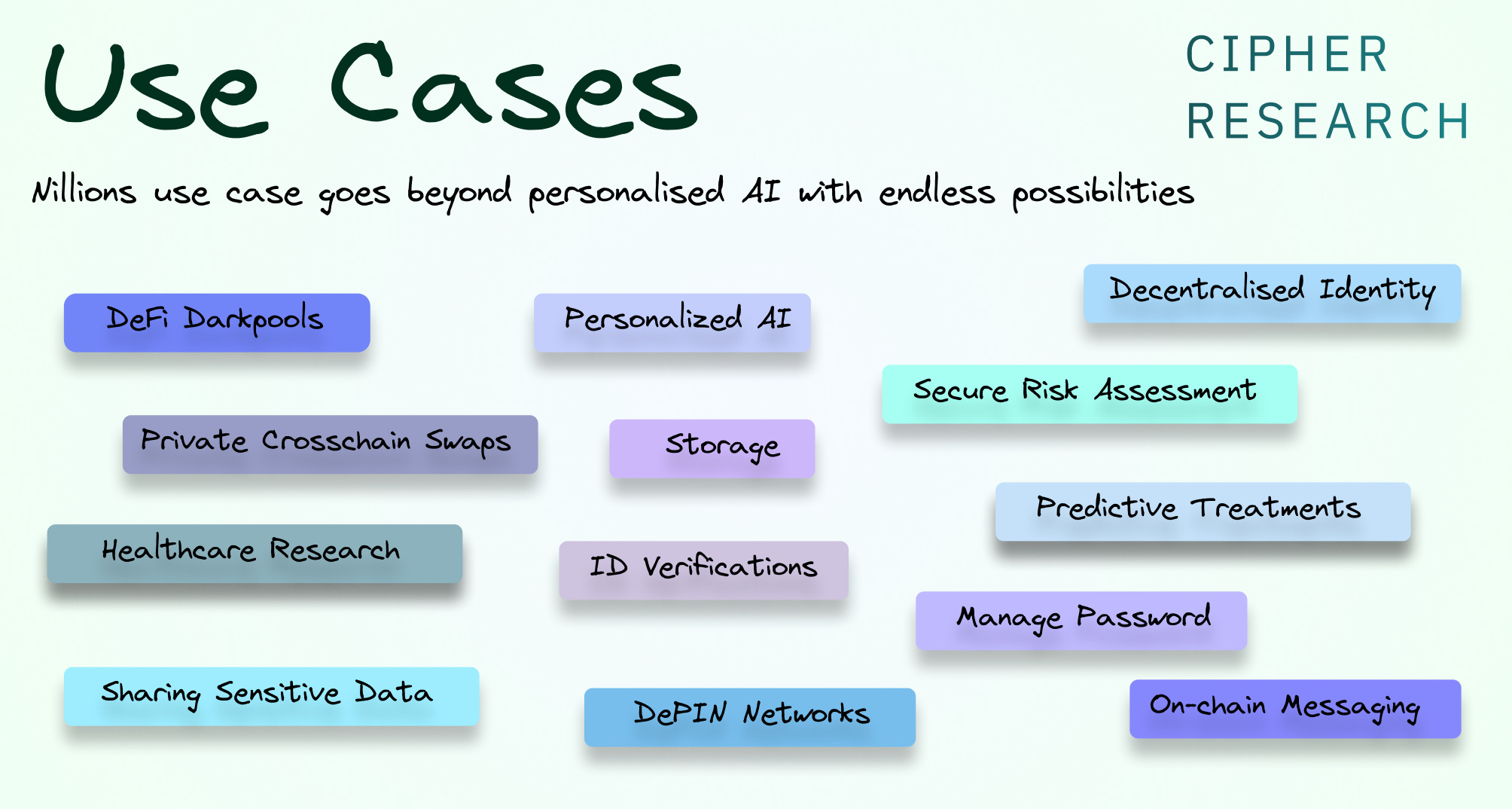
Nillion’s blind computation goes far beyond just personalizing AI. Its privacy-preserving framework is suitable for a wide range of applications, from DeFi dark pools to medical research and ID verification. Whenever privacy and sensitive data are paramount, Nillion provides a secure and efficient solution.
In particular, Nillion’s focus on privacy ensures that high-value data is kept safe in areas where traditional systems often fail.
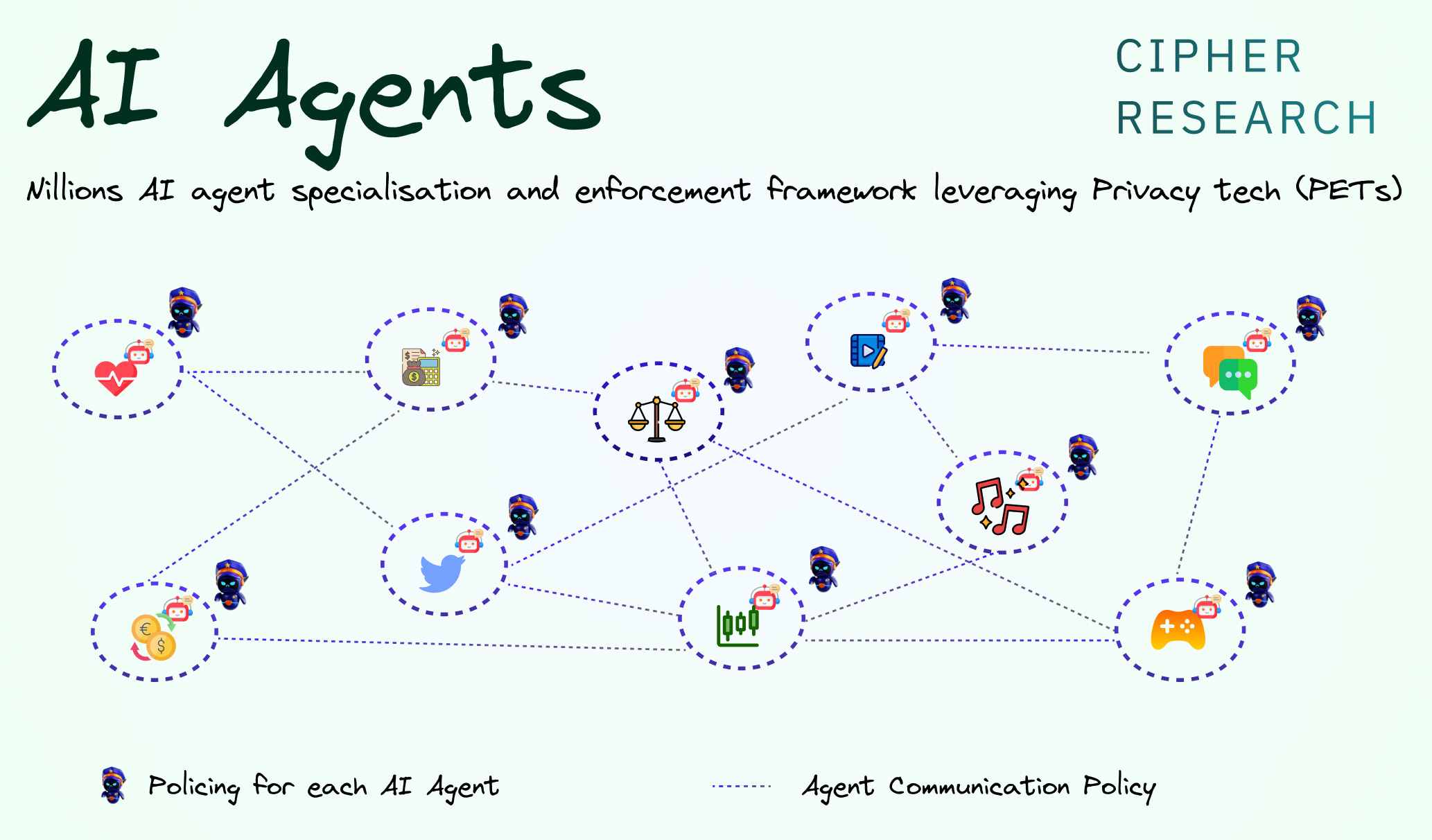
Beyond data protection, Nillion also features its own AI agent framework.
This framework ensures that AI agents can securely access private data while remaining within strict boundaries.
By enforcing scope and specialization, Nillion enables the creation of AI agents that are truly personal, secure, and trustworthy.
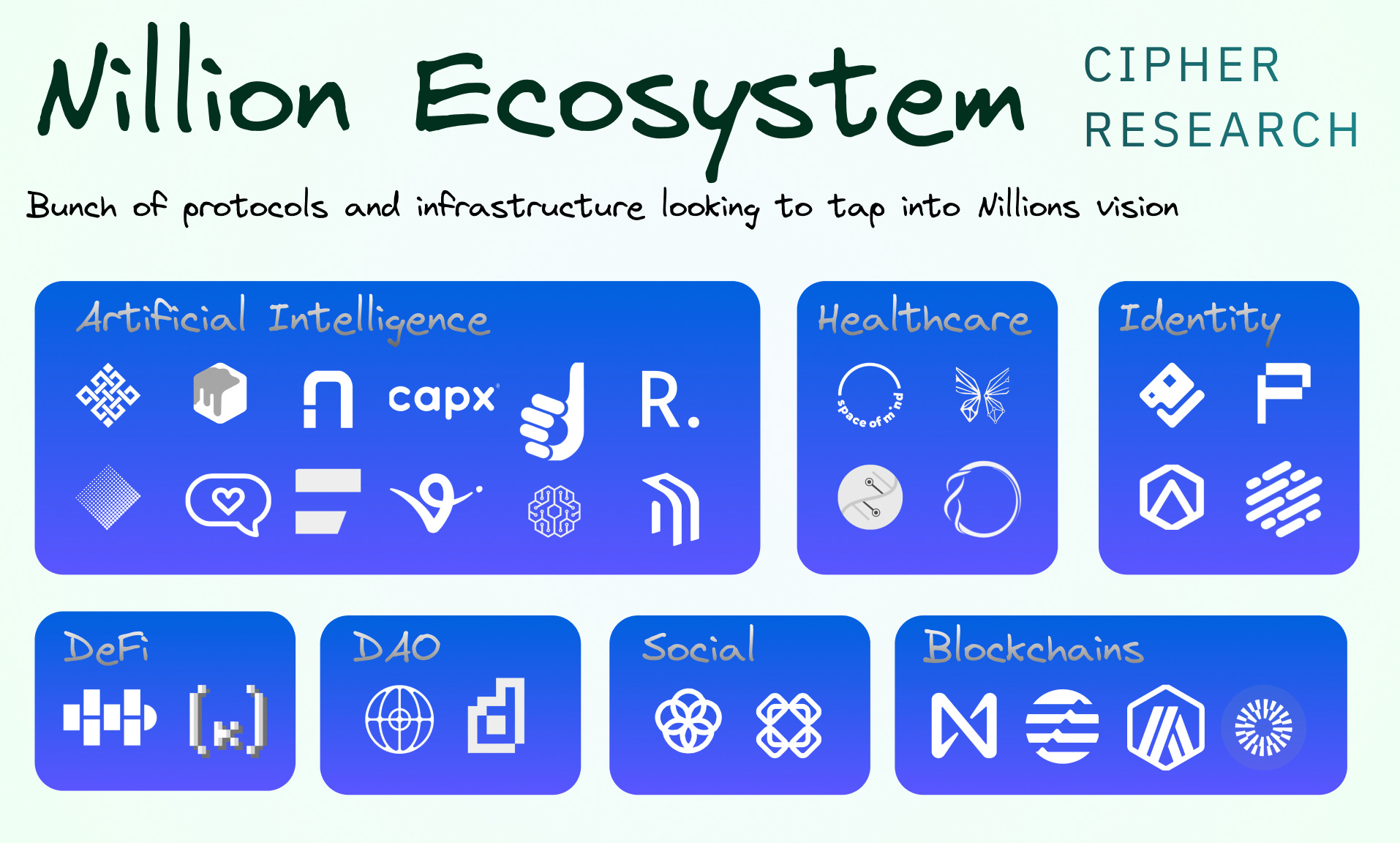
Nillion’s ecosystem is already thriving, even before the mainnet launch. With over 30 teams actively building on the platform and more than 15 verticals integrating, including AI, DeFi, DePIN, and Healthcare, the potential for innovation is vast. Some of the notable projects building on Nillion include Virtuals Protocol, Ritual network, and Capx.
Conclusion: The Future of Personalization and Privacy
Nillion is pushing the boundaries of what’s possible with privacy-preserving applications.
By enabling the secure processing of high-value data, Nillion is setting the stage for a new era of personalization without compromising privacy.
As the demand for secure, trustworthy AI grows, Nillion’s vision of a blind computer may well become the cornerstone of the next generation of privacy-first applications.
