
Vana For Dummies: All You Need to Know Explained in 2 Minutes
With $25 million raised from the likes of Paradigm, today we understand Vana, a protocol that is building the world’s largest User-Owned Data Network for AI

In a world where companies like Reddit and Google profit by selling your data to AI firms, Vana is flipping the script.
Vana lets you monetize your own data and become part-owner of the AI models that are trained with it. This new model of user-owned data is poised to revolutionize how AI companies access the critical data they need—and how users can finally take control and benefit from the value of their personal information.

Why AI Needs Your Data—Now More Than Ever
AI models have exploded in growth, relying on massive amounts of publicly available data for training.
But we’re quickly approaching a data wall, where the available data is simply running out. As these models evolve, they require newer, more relevant, high-quality data—data that’s no longer as accessible in the public domain.

This scarcity means AI companies will soon have no choice but to tap into private user data. That includes your posts on platforms like Reddit, X (formerly Twitter), Google, and Instagram.
Just 100 million users' worth of data is enough to keep AI models running for a long time.

As data becomes scarce, platforms like Reddit profit from walled gardens of private user data. Most users don’t realize they own all the data they create and can export it.
AI companies are faced with two options: pay massive fees to these platforms to access private data, or try to convince users to share it directly.

Enter Vana: The First-Ever User-Owned Data Network
This is where Vana comes in. Vana is creating the first-ever network for user-owned data, directly addressing this data shortage.
The platform allows users to contribute their data from across various platforms, creating a treasure trove of cross-platform information that can power AI models and personalized applications.
In this new system, user data becomes liquid—flowing freely and securely between contributors and developers who need it. And instead of tech giants reaping all the rewards, users are finally in control, earning tokens and ownership in the models that rely on their data.

How Vana’s Data DAOs Work: Making Data Liquid
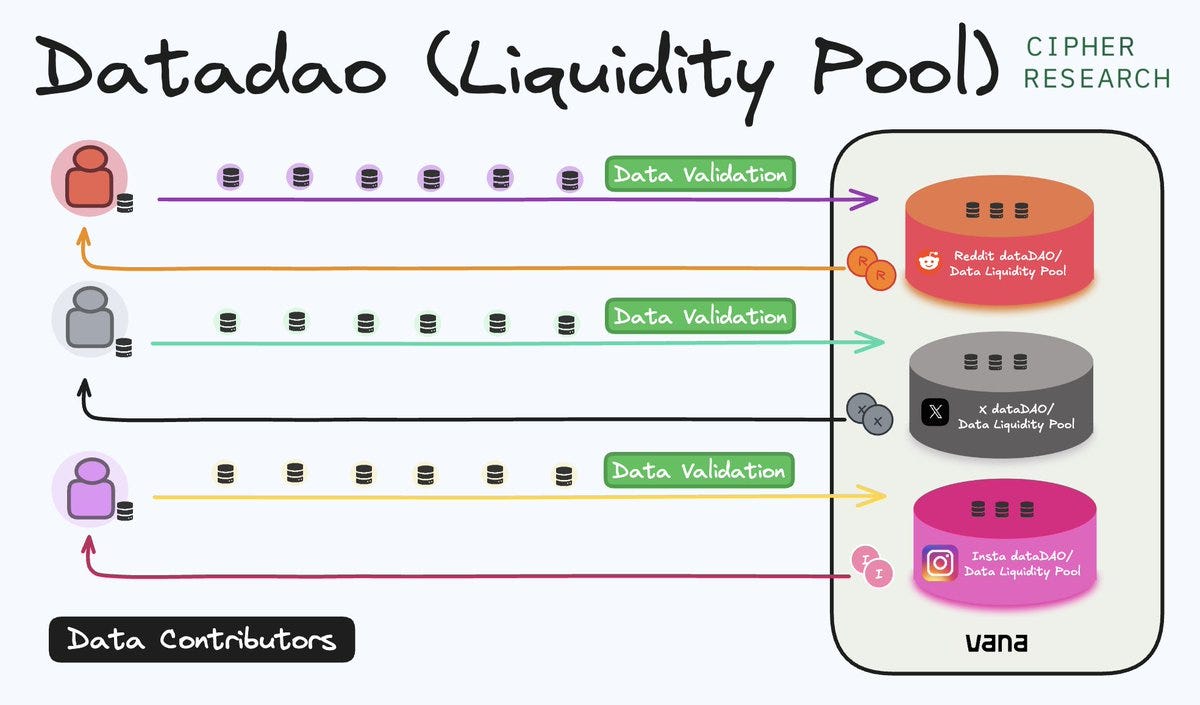
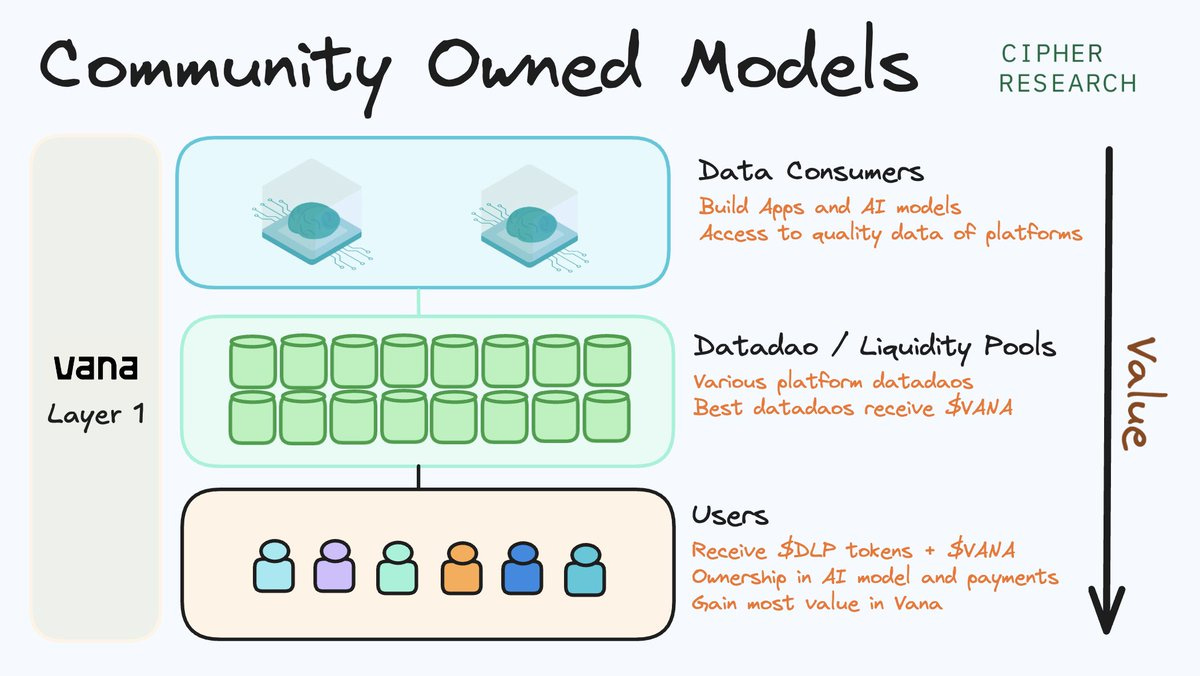
Vana introduces a revolutionary concept called Data DAOs (Decentralized Autonomous Organizations), also known as Data Liquidity Pools (DLPs). Here's how it works:
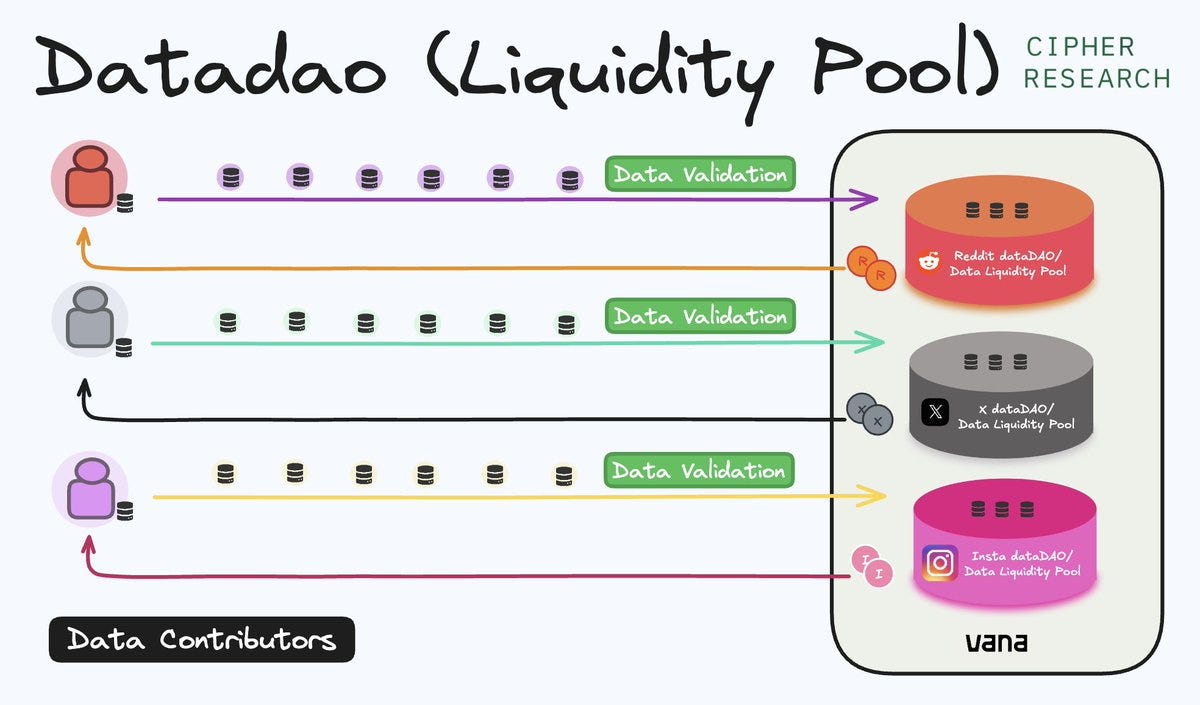
Users contribute their data to specific DAOs, such as a Reddit Data DAO, where all Reddit-related user data is collected and validated for quality.
In exchange, users receive tokens representing their stake in the DAO. These tokens can be traded or staked, giving users a financial incentive to contribute their data.
On the other side, AI companies, researchers, and developers access this data by providing ownership or equity in their models, meaning users become stakeholders in the AI models that use their data.
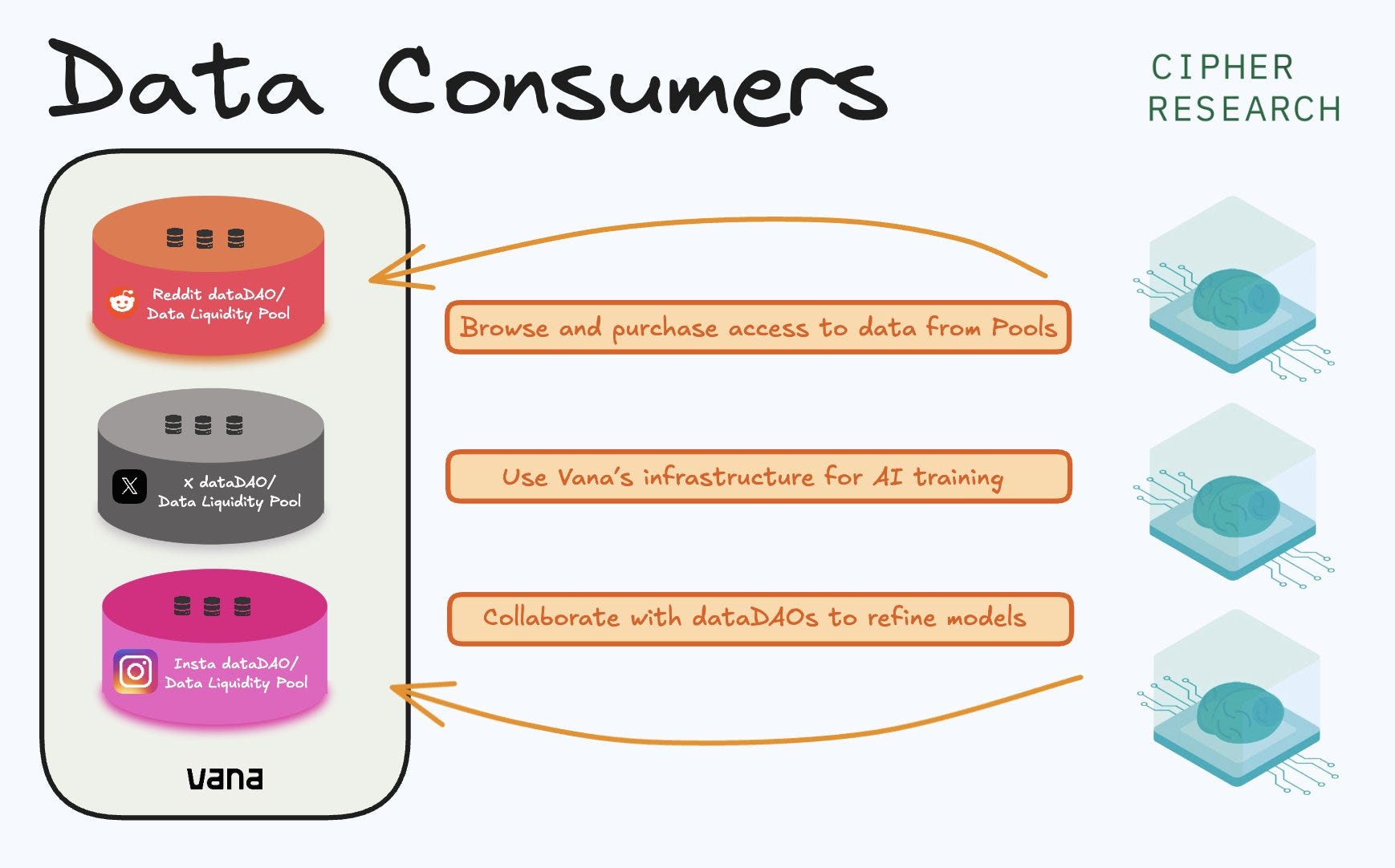
For example, if you contribute your Reddit data to a Reddit DAO, you’ll earn tokens that represent your contribution. When AI models trained with your data are used, you’ll get paid based on how much your data helps improve model performance.
Vana Incentivizes Data Sharing with $VANA Tokens
One of the biggest challenges with launching any new data network is the cold start problem—getting enough users to contribute data at the beginning to create a valuable dataset.
Vana solves this by offering $VANA tokens to users who contribute their data to Data DAOs. This helps bootstrap the platform by incentivizing early users, while also rewarding them for being early adopters.
The top 16 Data DAOs with the most user stake and highest metrics receive monthly distributions of $VANA tokens, which are shared among creators, stakers, and DAO token holders.
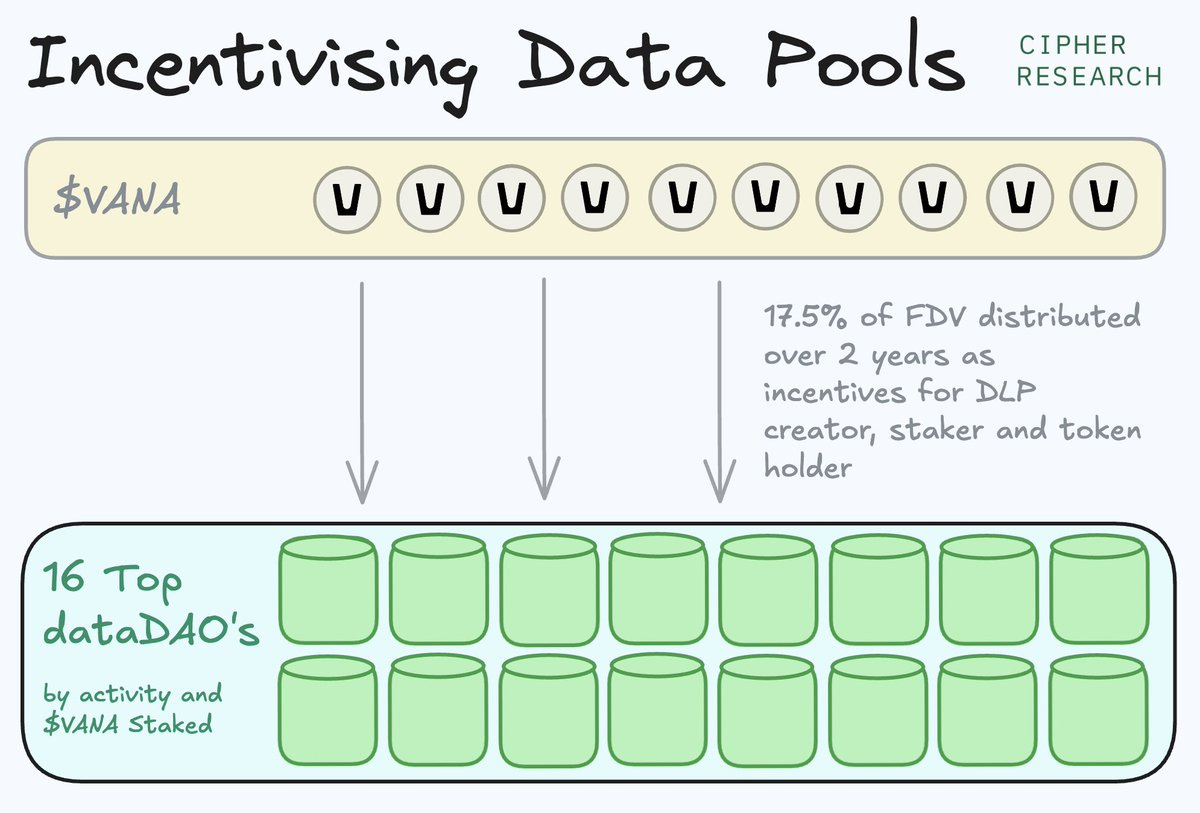
Most of the value flows directly to users, the true owners of the data.
This allows contributors to become real stakeholders in closed-source AI models. Users are paid when models are used or based on how much their data improves the model's performance.
Data DAOs: A Growing Movement
Since its launch, Vana has already sparked the creation of 63 Data DAOs. The first to go live was the Reddit Data DAO, which saw 140,000 real users export their Reddit data to Vana within just one week.
This rapid growth is now spreading to other platforms, with new Data DAOs being formed around X, LinkedIn, Instagram, Google Analytics, Tinder, and even Browsing History data.

By aggregating data from across platforms, Vana allows developers to train models on more diverse and comprehensive datasets. Users no longer have to worry about their data being locked behind a single platform’s walled garden—they can export and control it themselves.
Thoughts on Vana
Vana doesn’t just hand over your data without security. It’s a privacy-first platform, ensuring that user data is stored in a non-custodial, privacy-preserving manner. This means you keep control of your data, even when it’s being shared.
The platform also uses robust validation mechanisms to filter out junk data and ensure that only high-quality contributions are used in AI models. Proof of contribution guarantees that all data submitted is legitimate, preventing bad actors from flooding the system with low-quality or false information.
As a user, contributing your data to Vana is a no-brainer. Platforms like Reddit and Google are already looking to sell your data to AI companies. With Vana, you get rewarded for it and even gain ownership in the AI models built on your data.
As Vana’s ecosystem grows and more incentives are fully launched, the platform is expected to attract tens of millions of contributors. This massive influx of high-quality, user-contributed data will help train the next generation of AI models, ushering in a future where community-owned AI models dominate the landscape.

About Cipher Research
Cipher Research is a leading crypto research firm focused on DeFi and DePin (Decentralized Physical Infrastructure Networks). We specialize in delivering high-quality, digestible research designed for all users—whether you're a seasoned investor or just getting started.
